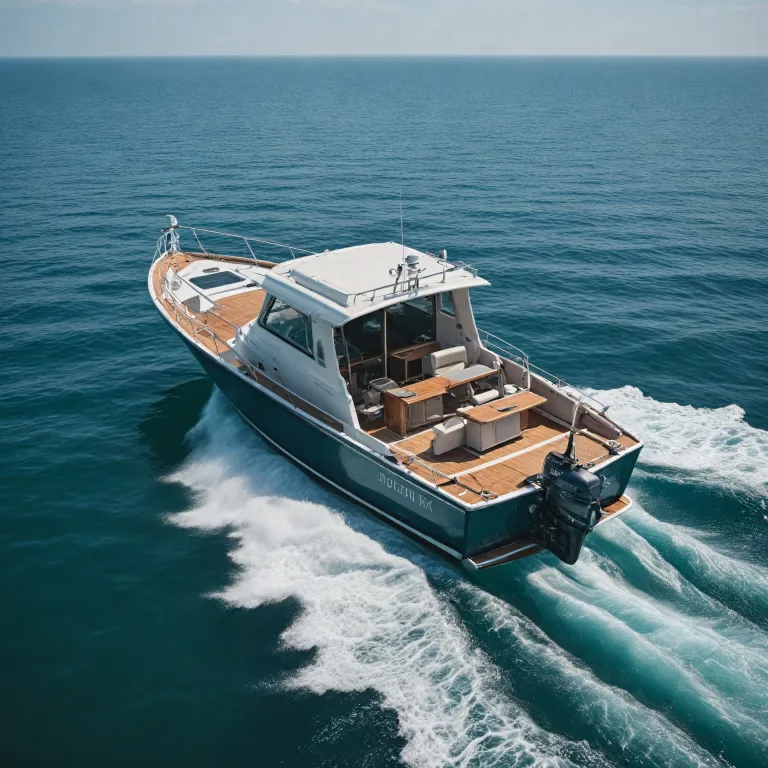
Understanding stability: what makes a boat ideal for cross-ocean travel
Stability is the cornerstone of any successful cross-ocean journey, especially for those passionate about diving and marine travel. The most stable boat for cross-ocean travel is defined by its ability to maintain balance and comfort in a variety of sea conditions. Hull form, displacement, and weight distribution are fundamental factors. Displacement boats, particularly those with full displacement hulls, are renowned for their steady motion and ability to handle rough waters. A full displacement trawler, for example, offers a gentle ride at displacement speeds, minimizing fatigue for both crew and passengers during long ocean crossings. The hull form and keel design also play a crucial role, with long keels and wide beams enhancing directional stability and reducing rolling. For those planning to sail the Atlantic or embark on other ocean crossings, understanding these technical aspects is essential. The boat will need to be equipped for extended periods at sea, with robust construction and reliable systems. Messages location and replies views on sailing forums often highlight the importance of proven designs for safety and comfort. Whether you are considering a semi displacement or full displacement hull, the most stable boat for cross-ocean travel will always prioritize seaworthiness and crew safety above all else.
Comparing hull forms: monohull versus multihull for ocean crossings
The debate between monohull and multihull designs is central when choosing the most stable boat for cross-ocean travel. Monohulls, especially those with full displacement hulls, have a long history of successful ocean crossings. Their ability to self-right and maintain course in heavy seas is a significant advantage. Displacement trawler models, such as those produced by Nordhavn Yachts and Kadey-Krogen Yachts, are favored for their robust construction and predictable motion. On the other hand, multihulls, including catamarans, offer exceptional initial stability due to their wide beam and twin hulls. This design reduces rolling and provides a stable platform for diving operations and marine exploration. However, multihulls may not always perform as well in extreme conditions, and their lack of self-righting capability is a consideration. Messages location and member joined discussions on sailing atlantic forums often reference the trade-offs between these designs. For those prioritizing comfort and space, multihulls are appealing, but for ultimate safety and proven performance, many experts recommend full displacement monohulls for cross atlantic journeys. For further reading on hull forms and their impact on stability, visit this comprehensive guide to hull design.
Key design features of the most stable boats for ocean travel
Several design features distinguish the most stable boat for cross-ocean travel. The hull form is paramount, with full displacement and semi displacement designs offering different benefits. Full displacement hulls move through the water rather than planing on top, providing a smoother ride at displacement speeds. This is particularly important for ocean crossings, where comfort over long distances is crucial. The keel type, such as a long keel, enhances directional stability and protects vital components like the rudder and propeller. Weight distribution, including the placement of heavy equipment and stores, affects the boat's motion and overall stability. Advanced materials and construction techniques, as seen in vessels from Selene Yachts and Fleming Yachts, further improve seaworthiness. Integration of modern navigation and safety systems is now standard, ensuring the crew can handle unexpected conditions. Messages location and click expand threads on marine forums frequently discuss the importance of redundancy and reliability in these systems. For a deeper dive into technical specifications and real-world examples, explore our detailed analysis of ocean-crossing yachts. The boat will need to be maintained meticulously, with regular inspections to ensure all stability features are functioning as intended.
Notable examples: stable boats that have crossed oceans
History provides numerous examples of boats that exemplify stability and seaworthiness for cross-ocean travel. The Nordhavn 46, with 80 boats sold, is renowned for its full displacement hull and long-range capabilities. Kadey-Krogen trawlers are another benchmark, designed specifically for extended offshore cruising and ocean crossings. The Drascombe Lugger, though smaller at 18.75 feet, has completed remarkable journeys, demonstrating that even compact boats can be suitable for ocean travel with proper preparation. The ocean rowing boat Sara G, measuring 11.1 meters, showcases the importance of hull form and displacement in handling challenging conditions. Grand Banks Yachts blend traditional elegance with modern innovation, making them a popular choice for those seeking both comfort and stability. Messages location and jul messages from experienced sailors often highlight the value of a proven track record when selecting a vessel. When evaluating boats for cross atlantic or other long passages, prioritize those with documented ocean crossings and positive replies views from the marine community.
Preparing your crew and vessel for a stable ocean crossing
Even the most stable boat for cross-ocean travel requires thorough preparation before setting sail. The crew must be familiar with all onboard systems, from navigation to emergency procedures. Training in handling displacement trawler dynamics and understanding the nuances of full displacement versus semi displacement performance is vital. Regular maintenance checks, including hull inspections and system tests, ensure the boat will perform reliably during the voyage. Messages location and oct messages in sailing forums often stress the importance of redundancy in critical systems, such as steering and power generation. Stocking adequate provisions and safety equipment is essential for the well-being of the crew. Planning the route, considering weather patterns, and establishing clear communication protocols are also key. The boat will need to be equipped for self-sufficiency, as assistance may be days or weeks away during ocean crossings. Engaging with member joined communities and leveraging their collective experience can provide valuable insights and support. Click expand on expert advice to maximize your chances of a safe and enjoyable journey across the atlantic or other major oceans.
Expert advice and technological advancements in stable boat design
The field of boat design continues to evolve, with manufacturers integrating advanced materials and technology to enhance stability and safety. Innovations such as improved hull shapes, lightweight composites, and sophisticated navigation systems are now standard in the most stable boat for cross-ocean travel. Displacement trawler models benefit from these advancements, offering greater efficiency and comfort for long-distance cruising. Messages location and apr messages from industry experts highlight the growing popularity of eco-friendly and sustainable designs. The integration of autonomous systems and enhanced safety features further supports the crew during challenging conditions. As one expert notes, "A boat's stability for ocean crossings is influenced by factors such as hull design, keel type, weight distribution, and overall construction quality. Features like a long keel, wide beam, and low center of gravity contribute to enhanced stability." Catamarans, while offering excellent initial stability, are being refined to address their limitations in extreme conditions. The future of ocean cruising will see continued innovation, ensuring that both novice and experienced sailors can find the most stable boat for their travel ambitions. Replies views and click expand on the latest trends to stay informed about new developments in the field.
Key statistics on stable boats for cross-ocean travel
- Number of Nordhavn 46 boats sold: 80 boats
- Length of the Drascombe Lugger: 18.75 feet
- Beam of the Wayfarer dinghy: 1.855 meters
- Sail area of the Sunfish sailboat: 75 square feet
- Length of the ocean rowing boat Sara G: 11.1 meters
Frequently asked questions about stable boats for ocean crossings
What makes a boat stable for ocean crossings?
A boat's stability for ocean crossings is influenced by factors such as hull design, keel type, weight distribution, and overall construction quality. Features like a long keel, wide beam, and low center of gravity contribute to enhanced stability.
Are catamarans more stable than monohulls for ocean travel?
Catamarans offer greater initial stability due to their wide beam and twin-hull design, reducing rolling motion. However, monohulls may provide better performance in certain sea conditions and are often preferred for their self-righting capabilities.
What is the ideal boat size for crossing the Pacific Ocean?
While boats as small as 30-35 feet have successfully crossed the Pacific, a size range of 40-55 feet is often considered ideal, offering a balance between comfort, storage capacity, and seaworthiness.
References: Nordhavn Yachts, Selene Yachts, Kadey-Krogen Yachts