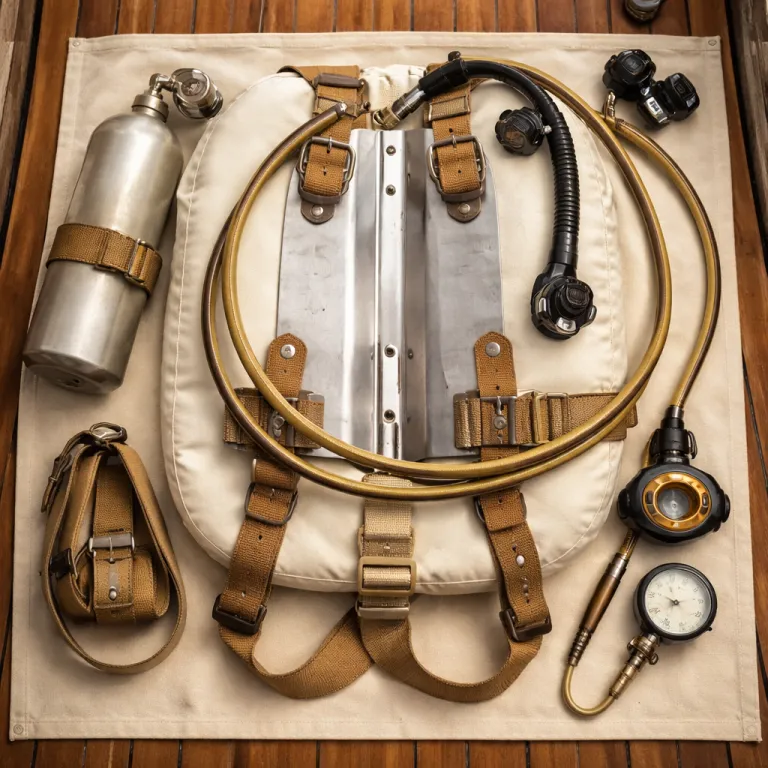
What a backplate wing BCD really is for traveling divers
A backplate wing BCD is a modular buoyancy control system built around a rigid plate, an inflatable wing, and a separate harness. This contrasts with a traditional jacket style BCD, where the air cell, padding, pockets, and harness are sewn into a single fixed system that cannot easily evolve with your diving. For traveling couples who plan every dive around visibility and marine life rather than resort pools, this backplate wing approach changes how your scuba gear behaves underwater and how it packs in your luggage.
The core of the system is the backplate, which can be a stainless steel backplate, an aluminum backplate, or even a carbon fiber backplate for ultralight travel. That backplate supports the wing, which is the donut or horseshoe shaped air cell that replaces the wraparound bladder of a jacket style BCD and keeps lift behind the diver instead of around the ribs. A simple harness threads through the backplate, creating a stable connection between diver, tanks doubles or single tank, and wing system without the clutter of extra padding and dangling accessories.
Because the backplate wing BCD is modular, you can change wings, harnesses, and weight systems as your diving changes from warm water recreational diving to more technical diving with heavier exposure protection. Recreational divers can start with a light aluminum backplate and compact wings for tropical scuba diving, then later add larger wings and different weight pockets for cold water dives with drysuits. This flexibility explains why many dive gear manufacturers now offer complete backplates harnesses and harnesses wings packages that can be configured for both open water holidays and more technical dives at home.
Why the Hogarthian configuration makes sense beyond caves
Technical divers refined the Hogarthian configuration to keep every hose, clip, and pocket streamlined in caves and wrecks, but the same logic benefits any reef dive. A clean backplate wing BCD with a long hose regulator and minimalist harness reduces drag in the water, which means less effort, lower gas consumption, and more relaxed scuba diving for couples who want longer bottom times. When recreational divers adopt this system, they are not trying to imitate technical diving; they are borrowing a configuration that simply works better in open water.
Industry data now suggests that roughly a fifth to a quarter of recreational divers use some form of backplate and wing system, and that percentage is rising as more dive shops promote modular systems for new students. For example, DEMA’s annual equipment trend summaries and retailer surveys consistently show growth in modular BCD sales, even if exact adoption figures vary by region and training agency. The trend is driven by divers who care about precise buoyancy control and stable trim, not by fashion or marketing cycles. For readers who want to go deeper into buoyancy skills before investing in new gear, a detailed guide such as advanced buoyancy control techniques for marine travel enthusiasts can frame how a backplate wing will support those techniques.
A common concern is whether such systems are only for experts, yet the verified guidance from major training agencies is clear: “Are backplate and wing systems suitable for beginners? Yes, with proper training.” When a new diver learns on a backplate wing BCD, the simple harness and predictable wing system often feel less cluttered than a heavily padded jacket BCD with many pockets and zippers. As one instructor who teaches both recreational and technical courses puts it, “If the harness is adjusted correctly from day one, most students forget they are even wearing it by the second dive.” The key is working with an instructor or dive guide who understands both recreational style diving and the Hogarthian philosophy, so the long hose, weight pockets, and accessories are routed cleanly from the first training dive.
Trim benefits: why horizontal position matters on every reef
Horizontal trim is not just a technical diving obsession; it is the foundation of graceful movement on any coral wall or seagrass meadow. A backplate wing BCD naturally encourages a flat, streamlined position because the wing sits behind the diver and the weight systems are aligned along the spine rather than hanging from the waist. When your body, tanks doubles or single tank, and wing system form one balanced line, every fin kick translates into forward motion instead of wasted vertical bobbing.
Couples who shift from jacket style BCDs to a backplate wing often notice that their fins stop stirring up sand on shallow macro dives. With the lift from the wings behind you and the mass of a steel backplate or aluminum backplate close to your centerline, your body stops tipping upright at the surface and underwater. This stable platform makes it easier to fine tune buoyancy with small lung volume changes, which is exactly what you practice when following any serious guide to mastering dive weight for effortless buoyancy.
Better trim also protects the reef, which matters on every dive from Raja Ampat to Cozumel. When your backplate wing BCD keeps you level, your exposure protection and fins stay clear of fragile corals and sponges, and your long hose and other accessories are less likely to snag. For underwater photographers, this stability is transformative, because the combination of a balanced harness, correctly sized wings, and well placed weight pockets allows you to hover motionless while framing a shy seahorse or cleaning station without sculling your hands.
The modular argument: one system for many types of trips
For traveling divers who plan several trips a year, the strongest case for a backplate wing BCD is modularity. Instead of buying separate BCDs for warm water recreational diving and cold water technical diving, you invest once in a backplate, harness, and wing system that can be reconfigured. A stainless steel backplate might live at home for drysuit dives, while a carbon fiber or aluminum backplate travels with you to the Maldives or the Red Sea.
Modern systems from brands such as OMS and Dive Rite allow you to swap wings, harnesses wings, and weight systems with a few bolts and webbing adjustments. You might use compact wings and minimal weight pockets for a single tank reef dive, then switch to higher lift wings and integrated pockets weight for tanks doubles on a deeper wreck. Because the backplates harnesses and core harness remain familiar, your muscle memory stays consistent even as the rest of the dive gear evolves around it. To make this more concrete, consider a travel oriented aluminum plate and 30 lb wing package in the USD 450–650 range versus a heavier stainless steel plate with a 40 lb wing for mixed cold and warm water use.
This modular approach also simplifies packing and airline logistics for couples sharing equipment. Two divers can travel with one set of spare accessories, a single repair kit, and interchangeable wings that fit both harnesses, reducing both luggage weight and overall price of ownership. When you add in exposure protection layers, such as switching from a 3 mm wetsuit to a drysuit for cold water, the ability to adjust weight pockets and wing lift without buying a new BCD becomes a practical advantage rather than a theoretical one.
The learning curve: what to expect when you switch
Transitioning from a jacket style BCD to a backplate wing BCD is less about difficulty and more about unlearning habits. The first difference you will feel is how the harness hugs your torso and how the backplate, whether stainless steel, aluminum, or carbon fiber, anchors the tank directly to your spine. This can feel restrictive on the surface, yet once you descend and start the dive, the system almost disappears as the wings support you in a balanced horizontal position.
Weight placement is the second major adjustment, because many divers move from integrated pockets on the sides of a jacket BCD to modular weight pockets mounted on the waist strap or cam bands. When you experiment with pockets weight and trim weights on the backplate, you quickly notice how small changes affect your posture in the water. Working with an experienced instructor or a well trained staff member at a serious dive shop helps you tune the system over a few dives rather than many frustrating trips.
Hose routing and accessories management complete the learning curve, especially if you adopt a long hose configuration borrowed from technical diving. The long hose for primary donation, a backup regulator on a short hose, and a streamlined wing inflator all sit neatly against the harness when clipped correctly. After several days of scuba diving with this configuration, most recreational divers report that the clean layout of their backplate wing BCD feels safer and calmer than the cluttered systems they used before, particularly when sharing air or navigating tight swim throughs.
Cost, value, and how to buy a backplate wing BCD wisely
From a budget perspective, a backplate wing BCD can look expensive when you first compare the price of individual components to a single jacket BCD on a dive shop wall. Yet the long term value shifts when you consider how often divers replace traditional BCDs because of worn padding, broken plastic D rings, or changing dive goals. With a modular system, you keep the backplate and harness for many years and only replace wings, weight pockets, or specific accessories as your diving evolves.
Many retailers now offer open box deals on backplates harnesses, wings, and complete systems, which can reduce the initial price without compromising safety. When evaluating options from brands such as OMS or Dive Rite, focus less on cosmetic features and more on the quality of the stainless steel backplate or aluminum backplate, the durability of the wing material, and the flexibility of the harness system. A well built wing system with robust stitching and reliable dump valves will outlast several cycles of fashion driven recreational style BCDs. Manufacturer specifications for popular travel models typically list total system weights around 2.3–3 kg for aluminum plate packages and 3.5–4.5 kg for stainless steel versions, which aligns with independent luggage tests by dive travel operators.
For traveling couples who plan trips that mix diving with other marine experiences, such as polar wildlife expeditions, a modular backplate wing BCD can integrate seamlessly into broader adventure planning. An in depth guide like this feature on local birding guides in Svalbard for marine travelers shows how serious operators think about equipment and logistics across different environments. When your core dive gear is adaptable, you can say yes to more varied itineraries, from warm water reefs to cold water fjords, without buying a new BCD for every destination.
Key figures and trends in backplate wing adoption
- Roughly 20–25% of recreational divers now use some form of backplate and wing system, according to aggregated retailer feedback and regional survey data presented at recent Diving Equipment and Marketing Association (DEMA) shows, indicating that modular configurations have moved well beyond a niche technical diving audience.
- The share of modular BCDs in new product launches has risen steadily over recent product cycles, with major brands expanding their lines of backplates harnesses, harnesses wings, and wing systems to meet demand from both open water and technical divers.
- Travel focused backplate wing BCD packages built around aluminum backplates or carbon fiber plates typically weigh 1–1.5 kg less than comparable jacket style BCDs, based on manufacturer specifications for popular models, which can save a couple 2–3 kg of luggage allowance on a long haul trip.
- In cold water regions where exposure protection requires drysuits and heavier undergarments, many divers report adding 4–6 kg of lead when using a lightweight BCD, whereas a stainless steel backplate can shift 2–3 kg of that weight from the belt to the plate for better trim.
- Training agencies and instructors increasingly introduce backplate wing systems at entry level, with survey data from regional dive shows and instructor forums suggesting that a growing minority of new divers complete their first certification dives in modular BCDs rather than traditional jackets.
FAQ about backplate wing BCDs for recreational divers
What is a backplate and wing system in scuba diving?
A backplate and wing system is a modular buoyancy control device where a rigid plate, usually stainless steel, aluminum, or carbon fiber, supports an inflatable wing and a separate harness. Unlike a jacket style BCD, the lift is concentrated behind the diver, and each component can be replaced or upgraded independently. This design allows divers to adapt the same core system to different environments, from warm water reefs to cold water technical diving.
Is a backplate wing BCD suitable for beginners?
Yes, a backplate wing BCD is suitable for beginners as long as they receive proper training on harness adjustment, weight placement, and hose routing. Many instructors now teach entry level courses using simple backplates harnesses and compact wings because the configuration encourages good trim from the first dive. The key is working with a dive shop or instructor who understands both recreational diving needs and the principles behind technical style setups.
How does a backplate wing improve buoyancy and trim?
The backplate wing design places buoyant lift behind the diver and aligns weight systems along the spine, which naturally promotes a horizontal position in the water. When combined with correctly sized wings and well positioned weight pockets, this reduces the tendency to float upright and kick downward, which wastes energy and stirs up sediment. Divers often find that fine tuning buoyancy becomes easier because the system responds predictably to small adjustments in breathing and inflator use.
What should I consider when choosing between stainless steel and aluminum backplates?
A stainless steel backplate adds built in ballast, which is helpful for cold water diving with thick exposure protection or drysuits, because it reduces the amount of lead needed on a belt or in pockets. An aluminum backplate is lighter and often preferred for travel focused recreational diving, especially when airlines enforce strict baggage limits. Some divers eventually own both, using the steel backplate at home and the lighter plate for trips, while keeping the same harness and wing system.
Are backplate wing systems more expensive than jacket style BCDs?
The initial purchase of a backplate wing BCD can be similar in price or slightly higher than a mid range jacket BCD, especially when you include quality wings, harness, and weight pockets. Over time, the modular nature of the system often reduces total cost because you can replace or upgrade individual components instead of buying a whole new BCD when your diving changes. Open box offers and package deals from reputable dive shops can also narrow the price gap while still providing robust gear suitable for both recreational and technical diving paths.