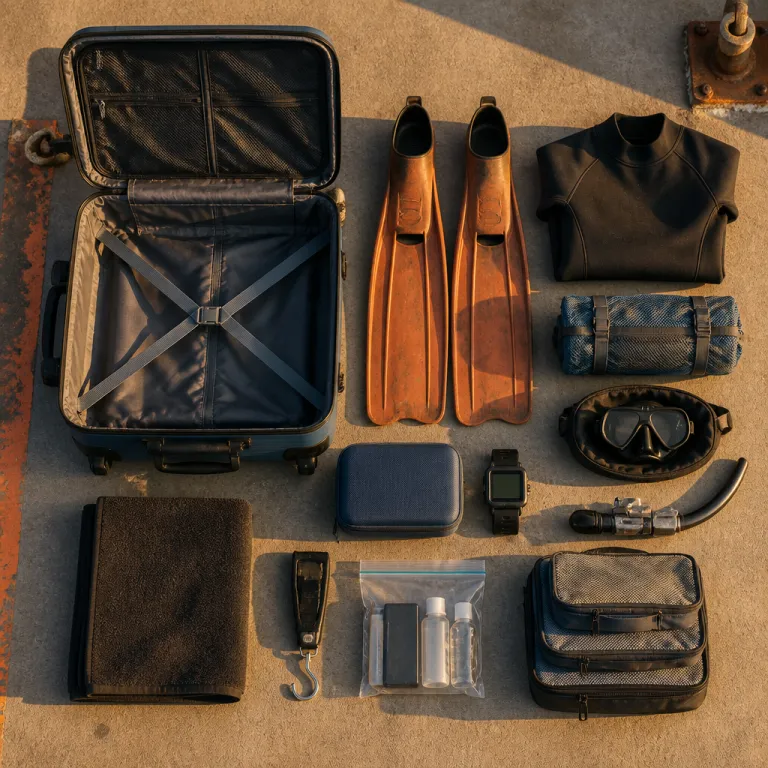
Section 1 – Why flying with dive gear airline rules can make or break your trip
Flying with dive gear airline rules is rarely the glamorous part of planning a family scuba holiday. Yet those rules will decide whether your carefully chosen scuba equipment arrives safely or sits in an airport backroom while you argue about baggage allowance at the counter. For premium family travelers who plan their year around one big scuba diving trip, understanding how airlines treat a checked bag with dive equipment is as important as choosing the right reef.
Most full dive gear sets, including BCD, regulator, wetsuit, fins, mask, and a dive computer, weigh between 15 and 25 kilograms before you add cameras or other items. Many airlines cap a standard checked piece at 20 to 23 kilograms, and some low cost carriers price every extra kilogram aggressively, so your checked baggage strategy directly shapes the total cost of travel. Airlines act as de facto regulators here, because they set the baggage rules that determine how divers are traveling with their own scuba gear rather than renting locally.
Industry data shows that a significant majority of carriers allow scuba equipment as part of regular checked luggage, but that does not mean your checked bags will be treated as free baggage. Some full service airlines quietly include sports equipment in a generous baggage allowance, while others treat a single checked bag with dive gear as oversized if it exceeds their linear inches limit. Because the average overweight checked bag fee hovers around 100 USD per flight segment, one miscalculation on flying diving logistics can erase the savings of bringing your own dive equipment instead of renting.
Key actors and what they control
Airlines control the formal baggage allowance rules, from how many checked bags you can bring to whether scuba diving equipment qualifies as sports gear. Divers, on the other hand, control how they pack, what they carry on, and how they balance weight between checked baggage and cabin luggage. Smart traveling with scuba gear means treating airline websites, travel agencies, and even local dive shops as partners in planning, not afterthoughts once the checked luggage is already on the scale.
Because policies change frequently, you should always research the specific airline’s rules for a checked piece that contains scuba gear before you book. Use a simple log register for each trip, noting which carrier allowed a free baggage item for diving equipment and which charged for every checked bag. Over time, this personal log register becomes a powerful tool when you compare routes, fares, and the real cost of traveling with your own dive equipment as a family.
Section 2 – Reading airline small print: baggage allowance, linear inches, and sports gear clauses
Once you have chosen a route, the next step in flying with dive gear airline rules is decoding the baggage allowance page like a contract. Airlines rarely highlight scuba gear in bold, but they usually classify diving equipment under sports items, with specific limits on weight and linear inches. For a family traveling with multiple checked bags, these details decide whether your total baggage remains free or becomes a line item that rivals the cost of a liveaboard night.
Start by checking how many checked bags are included in your fare and whether a checked piece can be swapped for a dedicated sports bag with scuba equipment. Some full service carriers allow one free baggage item for sports, while budget airlines charge for every checked bag and sometimes for cabin luggage as well. Pay attention to linear inches, because a long fin bag with integrated wheels can exceed the maximum size for checked luggage even when the weight is within limits.
Families should also look at cabin rules, because what you carry on matters as much as what you check. A regulator set, dive computer, and compact mask box usually fit into a small carry on bag, and these fragile items should never ride in checked baggage where rough handling is common. When you build your marine travel packing list, use a dedicated essential marine travel packing guide to balance what goes into checked bags and what stays with you in the cabin.
How to interpret fees and exemptions
Airlines often publish a table that lists standard checked baggage, sports equipment, and overweight or oversized items, but the scuba diving category may sit under a generic “water sports” heading. Look for phrases that mention scuba equipment, diving equipment, or sports bags with compressed air cylinders, and remember that tanks are usually prohibited unless they are completely empty and valves are removed. Even when scuba gear is allowed as part of normal checked luggage, overweight fees apply the moment your checked bag crosses the stated weight threshold.
Because the average airline fee for an overweight bag is around 100 USD per segment according to industry reports, a return trip with two heavy checked bags can quietly add hundreds of dollars. Families traveling with children should therefore weigh every checked piece at home, adjust items between bags, and keep a simple log register of actual fees paid on each airline. Over several trips, this data helps you identify carriers whose flying diving policies are genuinely family friendly, rather than just marketing themselves as such.
Section 3 – What to carry on and what to check: protecting the essentials
The golden rule of flying with dive gear airline rules is simple ; anything that is critical, expensive, or hard to replace mid trip stays in your carry on. That usually means your regulator set, primary and backup dive computer, prescription mask if you use one, and any compact camera housing that would be impossible to rent locally. Treat this cabin luggage as your survival kit for scuba diving, because if your checked baggage goes missing, you can still rent basic dive equipment and keep the trip alive.
Pack your regulator in a padded bag with a coiled hose layout, and place that bag with your dive computer and mask inside a small roller that fits airline cabin dimensions. This carry on will also hold essential travel documents, a printed log register of recent dives, and any medication that cannot be checked. Remember the security rule from the expert dataset ; “How should I pack my regulator? In a padded bag, preferably in carry-on luggage.”
Everything else can usually ride in checked luggage if packed intelligently. Use your BCD as a soft shell inside the checked bag, wrapping it around fins, wetsuit, and other items to create a protective nest for more fragile scuba gear. A well packed checked piece with dive equipment can absorb impacts that would otherwise damage a loose fin or a poorly protected camera tray, and this approach keeps the overall weight balanced across your checked bags.
Using your gear as padding, not dead weight
Think of your checked bag as a three dimensional puzzle where every piece of scuba equipment has a structural role. Place heavy items such as fins and weight pockets at the bottom near the wheels, then layer the BCD, wetsuit, and soft clothing around them to cushion shocks. Your dive gear should never rattle when you move the checked bag ; if it does, you have unused space that could protect other items.
Families often underestimate how much volume children’s wetsuits and rash guards occupy, so plan one shared checked piece for soft dive equipment and another for harder items. Use a detailed dive trip gear checklist to ensure that every bag with scuba gear has a clear purpose and that nothing essential ends up in the wrong place. When you are traveling with multiple checked bags, label each checked bag clearly with your name, phone number, and destination liveaboard or resort, so airline staff can route delayed checked luggage quickly if something goes astray.
Section 4 – The rent versus bring equation: what really belongs in your dive bag
Not every piece of dive gear deserves a seat on the plane, especially when you travel as a family and every kilogram counts. The rent versus bring decision is central to flying with dive gear airline rules, because it determines how many checked bags you need and whether you can stay within the standard baggage allowance. A thoughtful approach here can mean the difference between a relaxed check in and a tense repack on the airport floor while children wait nearby.
As a rule, always bring your own regulator and dive computer, because these items are calibrated to your preferences and represent the core of your scuba equipment safety system. Masks and computers are deeply personal, and while many dive shops rent high quality diving equipment, the familiarity of your own setup reduces stress when you are flying diving in new environments. For families, having at least one full set of trusted scuba gear in the group can also provide a benchmark if you need to compare rental items on arrival.
BCDs and wetsuits sit in a more flexible category. In destinations with strong dive infrastructure, such as Maldives liveaboards or well established Caribbean resorts, renting a BCD and wetsuit can be more efficient than paying overweight fees on checked baggage. In remote regions of Indonesia or the Pacific, where the range of sizes and conditions for rental dive equipment may be limited, bringing your own BCD and wetsuit in a dedicated checked bag can be worth the extra weight.
Family specific considerations when traveling with scuba gear
Children grow quickly, so their wetsuits and sometimes even fins may change size between trips, which makes renting more logical than buying a full set of dive gear every season. Parents, however, often prefer to travel with their own regulator, dive computer, and core scuba equipment, because they know exactly how these items behave under water. When you balance these choices across the family, you can usually reduce the number of checked bags while still ensuring that everyone has comfortable and safe diving equipment.
Use a simple spreadsheet or log register to track which family member owns which piece of scuba gear, what needs servicing, and what can be rented at the next destination. Before booking flights, contact the dive centre to confirm the quality and brands of their rental scuba equipment, then compare that information with the airline’s baggage allowance and overweight fees. This methodical approach turns the rent versus bring question from a guess into a clear financial and comfort calculation that respects both your budget and your expectations for the trip.
Section 5 – Packing hacks that keep weight down and gear protected
Once you have decided what to bring, the art of packing becomes your main tool for mastering flying with dive gear airline rules. The goal is to keep each checked piece under the airline’s weight limit while ensuring that every item of scuba gear is protected from impact and moisture. A few disciplined habits at home will save you from last minute repacking dramas at the airport check in desk.
Begin by laying out all diving equipment on the floor, grouped by function ; regulators and computers in one cluster, exposure protection in another, and accessories such as lights, reels, and SMBs in a third. Use a digital scale to weigh each bag with its proposed contents, adjusting until every checked bag sits just below the airline’s threshold, leaving a small margin for scale differences. Heavy non fragile items like fins and weight pockets should go at the bottom of the checked luggage, while delicate scuba gear rides in the centre wrapped in neoprene and clothing.
Remember that some items are prohibited in cabin luggage, even if they are small. The expert dataset is clear on this point ; “Can I carry my dive knife in hand luggage? No, dive knives must be in checked baggage.” Pack knives, cutting tools, and any other sharp items deep inside a checked bag, ideally within a fin pocket or wrapped in a wetsuit sleeve, so they are both secure and compliant with security rules.
Smart use of accessories and shipping services
Use mesh bags inside your main dive bag to separate wet and dry items on the return journey, because residual moisture can damage electronics and logbooks during travel. For families traveling with multiple sets of scuba gear, consider a hard sided checked piece for the heaviest dive equipment and a lighter soft bag with wheels for clothing and non fragile items. This division keeps the most valuable scuba diving gear in a single, easily identifiable checked bag that you can monitor closely during check in and arrival.
On some routes, especially when flying diving with strict low cost carriers, luggage shipping services can be surprisingly competitive. If you are traveling with a group and several checked bags of dive equipment, shipping one consolidated checked piece in advance may cost less than paying overweight fees on multiple checked bags. When you evaluate these options, include the shipping company’s insurance terms in your log register, alongside airline baggage allowance notes, so you can compare real world outcomes on future trips.
Section 6 – Cost control, family comfort, and long term planning for repeat dive travel
For premium families who plan to dive every year, flying with dive gear airline rules becomes a recurring negotiation between comfort, safety, and cost. The first trip often feels complex, but by the second or third journey, patterns emerge in your log register that show which airlines, routes, and packing strategies work best. Treat each trip as data, not just an isolated holiday, and your long term travel planning will become both calmer and more economical.
Start by tracking every baggage fee you pay, from standard checked luggage charges to overweight penalties and sports equipment surcharges. Note which carriers allowed scuba gear as part of free baggage and which insisted on separate fees for each checked piece of diving equipment, even when the weight was modest. Over time, you will see that some airlines are consistently friendlier to traveling with scuba gear, while others make every checked bag feel like a revenue opportunity.
Comfort matters as much as cost, especially with children in tow. A slightly higher fare on an airline that includes two checked bags per person and a generous cabin allowance can be cheaper overall than a bare bones ticket that charges for every checked bag with dive gear. When you plan future trips, combine this financial analysis with softer factors such as on time performance, connection quality, and how staff handled delayed checked baggage on previous journeys.
Building a family dive travel system
Think of your family’s dive travel as a system that improves with each iteration. Standardize your packing lists, keep a shared digital log register of gear servicing dates and airline experiences, and assign each family member responsibility for specific items of scuba equipment. Children can manage their own masks and snorkels, while adults oversee regulators, dive computers, and the main checked bags.
As your experience grows, you may refine your kit toward lighter gear, such as travel BCDs and compact fins, which reduce the weight of each checked bag without compromising safety. You might also invest in thoughtful scuba related gifts that support this system, from streamlined logbooks to personalized luggage tags, drawing inspiration from curated ideas such as the best scuba gifts for ocean lovers. The aim is not to chase every new gadget, but to build a coherent, travel friendly set of dive gear that works seamlessly with the airline rules you encounter most often.
Key figures for flying with dive gear and airline baggage rules
- Industry reports indicate that around 85% of airlines worldwide allow scuba equipment as part of standard checked baggage, which means most divers can pack their dive gear into regular checked bags rather than paying for specialized sports cargo.
- The average airline fee for an overweight checked bag is approximately 100 USD per segment according to published airline tariffs, so a return journey with two overweight checked pieces can easily add 400 USD to the total cost of a family dive trip.
- A typical full set of scuba gear, including BCD, regulator, wetsuit, fins, mask, and dive computer, weighs between 15 and 25 kilograms, which often approaches or exceeds the 20 to 23 kilogram limit for a single checked piece on many economy class tickets.
- Travel industry analyses show a trend toward tighter baggage allowance policies, with more airlines unbundling checked luggage from base fares, which makes pre trip research into flying with dive gear airline rules increasingly important for cost conscious families.
- Digital packing and log register apps have seen growing adoption among frequent travelers, helping divers track the weight of each bag with scuba gear and reducing the likelihood of last minute overweight surprises at airport check in counters.
FAQ – Flying with dive gear, airline rules, and practical packing
Can I carry my dive knife in hand luggage?
No. Security regulations classify dive knives as sharp objects, so they must always be placed in checked baggage rather than cabin luggage. Pack the knife deep inside a checked bag, ideally wrapped in neoprene or clothing, to keep it secure and compliant.
Do airlines charge extra for dive gear?
Charges vary by airline and fare type. Some full service carriers treat scuba equipment as part of the normal baggage allowance, while others apply specific sports equipment fees or standard overweight charges if your checked bags exceed the permitted weight. Always check the airline’s baggage allowance page before booking, and record the outcome in your personal log register for future comparison.
How should I pack my regulator for a flight?
The safest method is to place your regulator in a dedicated padded bag and carry it in your cabin luggage. This protects delicate first and second stages from impact and temperature extremes in the hold, and it ensures that you still have your own regulator even if checked baggage is delayed. Many experienced divers also pack their primary dive computer and mask alongside the regulator in the same carry on bag.
Is it better to rent or bring my own BCD and wetsuit?
The answer depends on destination, airline rules, and personal comfort. In well serviced dive hubs with modern rental fleets, renting a BCD and wetsuit can save weight and reduce the number of checked bags, especially for families. In remote areas with limited rental options or unusual sizing needs, bringing your own BCD and wetsuit in a checked piece of luggage often provides better fit and reliability.
How can I avoid overweight baggage fees when traveling with scuba gear?
Weigh every bag at home, distribute heavy items across multiple checked pieces, and keep only essential, fragile scuba gear in your carry on. Choose lighter travel specific dive equipment where possible, and consider renting bulky items like tanks and weights at the destination. Maintaining a simple log register of past airline experiences and fees will help you refine your packing strategy and select more baggage friendly carriers over time.