The rhythm of a liveaboard daily life schedule
The alarm sounds before sunrise and the boat is already gently moving. You feel the sea through the mattress, a low reminder that this liveaboard routine runs on ocean time, not city clocks. Most divers need a moment to remember which part of the world they are in and which deck they left their damp wetsuit on.
You step out of your cabin and climb the short stairs to the main deck, where the crew has laid out coffee, tea and light snacks for the first dive of the day. This is when the on-board schedule shows its purpose; the first briefing happens while the horizon is still soft and the water looks like brushed metal. People speak quietly, checking computers, clipping cameras, and giving each other the small nod that says “ready”.
The first entry into the water usually happens just after dawn, around 6:00–6:30 a.m., when marine life is still in night mode and the reef feels half asleep. On a well run liveaboard, divers slide off the back of the boat in small groups, guided by a divemaster who knows every coral head and cleaning station. That early immersion sets the tone for the day, reminding you that life on board is built around the next dive, not the next email.
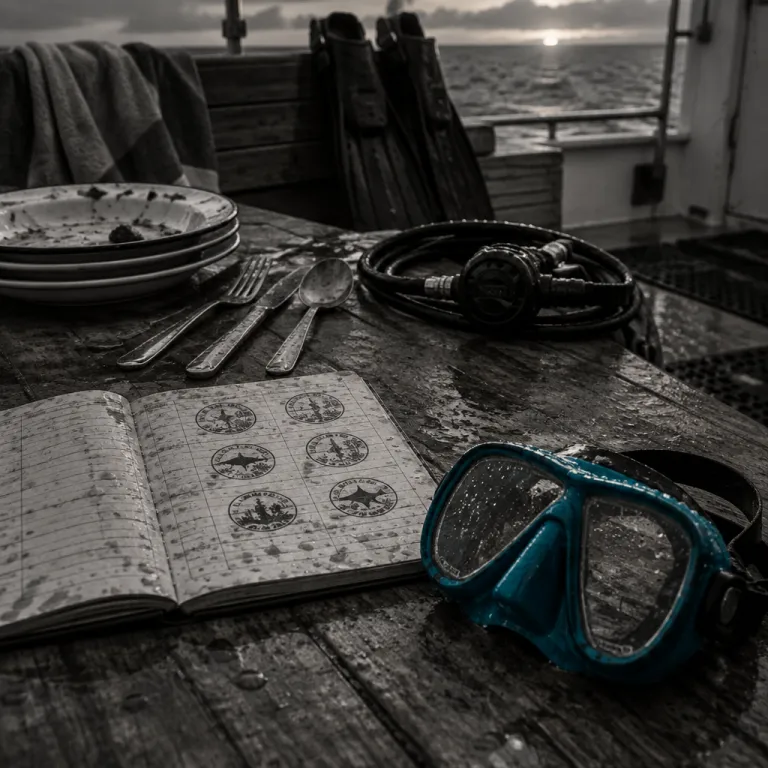
Back on board, breakfast appears almost magically, and the crew will already be filling tanks while you peel off neoprene. The surface interval becomes shared space for logbooks, camera checks and quiet conversations about what moved in the blue water below. This is where couples realise that a typical day at sea is less about constant action and more about curated pauses between dives.
By late morning, the second dive of the day is ready, and the boat has often repositioned to a new site while you were eating. That sense of always moving yet never rushing is one of the understated luxuries of life at sea for divers who value time in the water over anything else. You start to understand why people return to liveaboards again and again, trading square metres of cabin space for square kilometres of open sea.
Cabins, shared space and the social reality on board
Cabins on most liveaboards are compact, functional and designed for sleep, not lingering. Couples used to sprawling hotel rooms quickly learn that every square metre of space on a boat has a job, and that bags must be edited ruthlessly before you ever step on board. The daily rhythm leaves little time for lounging in your cabin anyway, because the real social life happens on the dive deck and in the saloon.
Shared tables at meals mean you will talk to people you would never meet on land, from new divers on their first big trip to underwater photographers planning their next liveaboard fleet itinerary. The rhythm of dive, eat, rest, repeat creates a shorthand intimacy; by the second day, you know who likes strong coffee, who always jumps first, and who quietly checks on everyone’s gear. When the chemistry works, this social fabric becomes one of the best parts of daily life at sea.
Upgrades to larger cabins or upper deck rooms buy you more privacy and slightly less engine noise, but they do not change the core experience of living on a moving platform. You still share rinse tanks, camera tables and briefing benches, and you still need to work with other divers to keep the dive deck safe and uncluttered. Choosing the right route and cabin class in advance, using a detailed guide such as how to choose a liveaboard route and cabin class, helps align expectations with reality.
For couples, the social intensity can be either a delight or a strain, depending on how much you enjoy being around people all day. If you are introverted, plan small rituals that give you mental space, such as a quiet coffee on the bow before the first briefing or a short walk around the upper deck between dives. The key is understanding that this style of trip is less about private retreat and more about shared experience, where the group’s mood can shape how the whole day feels.
On well managed liveaboards, the crew will set gentle boundaries that keep the atmosphere respectful, from no smoking in enclosed areas to clear rules about alcohol and night diving. These guidelines are not about control; they are about safety, sustainability and ensuring that everyone on board can enjoy the same quality of marine life encounters. When you see how smoothly the on-board routine runs under this structure, you appreciate the quiet work moving behind the scenes that keeps the trip safe and relaxed.
Trade offs: small cabins, sea motion and no Wi Fi
Life on a liveaboard is a deliberate trade, exchanging land comforts for proximity to the sea. Cabins are smaller than most hotel rooms, storage is limited, and you will feel the boat moving whenever the swell shifts direction. For some divers, that constant reminder of being at sea is part of the charm; for others, it can be a test.
If you are prone to seasickness, the structured dive schedule can feel demanding, because the boat may travel at night to reach remote sites by dawn. Midship cabins on lower decks usually move less, and bringing your preferred medication is non negotiable when planning this kind of trip. The crew will often advise you to stay on deck in fresh air during crossings, watching the water and horizon instead of reading in an enclosed space.
Connectivity is another reality check, because many liveaboards operate far from mobile towers, and Wi Fi, if available at all, is often slow and intermittent. This is not the trip for streaming, constant messaging or remote work moving between conference calls and dives. For couples used to being always online, the first day without a reliable signal can feel unsettling, but by the third day, many describe it as a rare luxury.
Budget conscious travellers sometimes worry that choosing more affordable liveaboards means compromising on safety or marine life access. In practice, careful research using resources such as budget liveaboards that do not cut corners can reveal boats that prioritise maintenance, crew training and sustainability while keeping rates reasonable. The real cost difference often lies in cabin size, finishings and non essential amenities, not in the quality of the diving itself.
What you gain in return for these trade offs is time, because a well planned liveaboard itinerary maximises hours in the water and minimises transit. Instead of spending half your day on a day boat commuting from shore, you wake up already anchored above the reef, with the first dive just a short briefing away. For divers who measure a trip by encounters with marine life rather than thread counts, that exchange feels more than fair.
Why divers fall for the liveaboard way of life
The first reason people fall in love with liveaboards is simple; you get more and better dives in less overall time. A typical on-board timetable offers three to four day dives plus an optional night dive, all within a few fin kicks of the boat. That density of immersion changes how you see a reef, because you watch the same space shift from dawn to midday to dusk.
Remote itineraries are the second hook, because many of the world’s most celebrated marine life encounters sit far beyond the reach of day boats. Think of offshore seamounts in the Maldives, the outer atolls of the Red Sea or the far corners of Indonesia’s Raja Ampat, where currents bring pelagic species close to the reef. Only a liveaboard fleet with the range and logistics to stay on site for several days can give divers repeated chances at those moments.
There is also a quieter transformation that happens when your daily life shrinks to a simple loop of dive, eat, rest and talk. Without meetings, traffic or constant notifications, couples often find they have better conversations on the top deck at night than they have had in months on land. The sea becomes both backdrop and reset button, a place where priorities feel easier to see.
For serious divers looking to refine skills, the concentrated format of a liveaboard trip is ideal for structured training. Multiple dives per day with the same guides allow you to work on buoyancy, gas planning and situational awareness in a consistent environment, especially when paired with advanced courses from reputable operators. A detailed guide such as how serious divers master deeper, safer underwater travel can help you frame the week as both holiday and progression.
Finally, there is the environmental perspective, because one well planned liveaboard trip can sometimes be a better sustainability choice than multiple shorter resort stays with repeated flights and transfers. Concentrating your diving into a single, efficient itinerary reduces repeated boat journeys from shore and can support operators who invest in responsible waste management and fuel efficient routes. When you see how carefully some crews handle moorings, grey water and reef safe practices, you realise that sustainability at sea is not abstract policy but daily work moving through every task on board.
Who a liveaboard suits, what to pack and how to prepare
A liveaboard suits divers who are comfortable in the water, happy with routine and willing to share space with strangers for several days. It is ideal for couples who prioritise marine life encounters over spa menus and who understand that the boat itself is a functional platform, not a floating resort. If one partner does not dive, think carefully; non divers can feel isolated when the main content of each day revolves around briefings and underwater time.
Families with young children often find the constraints of a fixed dive timetable challenging, because decks, ladders and equipment areas are not designed as playgrounds. Older teenagers who already dive can thrive in this environment, especially when they respect safety rules and the rhythm of the day. Seasickness prone travellers, or those who need constant connectivity for work, may be happier with a land based operation that offers day boats instead.
Packing for a liveaboard is an exercise in restraint, because every extra item takes up space in a cabin that must also hold wet gear. Focus on soft bags, quick drying clothing, a light fleece for windy evenings and a second swimsuit so you are not climbing into something cold between dives. Bring your own mask, computer and any medical essentials, because while the boat will carry spares, they may not match your preferences.
Before you board, align expectations as a couple about how you want to use your off water time, whether that means reading quietly, editing photos or socialising with other people in the saloon. Clarify your priorities with the operator in advance, from dietary needs to whether the boat supports specific sustainability practices such as reef safe sunscreen policies or reduced single use plastics. The more you prepare, the easier it becomes to relax into the daily life rhythm once you are actually at sea.
During the trip, respect the structure that keeps everyone safe; attend every briefing, check your own gear, and be honest with guides about your comfort level on each dive. The liveaboard schedule is designed to balance rest and exertion, but only you can manage your own energy and hydration across multiple dives per day. When you work with the crew and other divers as a team, the boat feels less like a vessel and more like a small, efficient community moving together through the water.
FAQ
How many dives per day can I expect on a liveaboard?
Most recreational liveaboards offer three day dives plus one optional night dive, structured around meals and surface intervals. On some itineraries, the first and last days may have fewer dives due to transfers and safety limits. Technical or expedition style trips can have different schedules, but the guiding principle is always safe nitrogen loading and adequate rest.
Is a liveaboard suitable for new divers?
Liveaboards can be suitable for newer divers who are already comfortable with basic skills and buoyancy, but they are not the best place to finish an entry level course. Conditions may include currents, deeper profiles and repetitive diving that demand good gas awareness and discipline. If you have fewer than 20 logged dives, consider gaining more experience on day boats before committing to a full week at sea.
What level of fitness do I need for a liveaboard trip?
You do not need to be an athlete, but you should be able to climb ladders in full gear, manage your own equipment and handle several dives per day without exhaustion. Good cardiovascular health and basic strength make the experience safer and more enjoyable. If you have any medical conditions, consult a dive medicine specialist before booking.
How do liveaboards handle environmental sustainability?
Responsible operators minimise single use plastics, manage grey water carefully, use mooring buoys instead of anchoring on reefs and brief divers on low impact behaviour. Some boats support local conservation projects or marine parks through fees and partnerships. When researching options, ask specific questions about fuel efficiency, waste management and reef safe policies rather than accepting vague sustainability claims.
Can I work remotely from a liveaboard?
In most cases, relying on a liveaboard for remote work is unrealistic because connectivity is patchy or absent on many routes. Even when Wi Fi exists, bandwidth is usually reserved for operational needs and emergency communication. The daily schedule of dives, briefings and boat movements also leaves limited uninterrupted time for focused work.