Scuba swimming pools: from first bubbles to deep diver training
What makes a scuba swimming pool ideal for first underwater steps
A purpose built scuba swimming pool gives beginners a calm, predictable start. The water stays at a stable temperature and visibility is usually crystal clear, which removes many distractions that can unsettle a new diver. This controlled pool setting lets you focus on breathing, buoyancy, and basic scuba skills without waves, currents, or changing weather.
Specialized facilities such as Deep Dive Dubai and Y 40 Deep Joy show how far a modern scuba swimming pool concept can go, with depths of 60.02 metres and 42 metres respectively that allow both shallow training and very deep practice. According to Guinness World Records, Deep Dive Dubai is currently recognised as the deepest swimming pool for diving, while Scuba Diving Magazine highlights Y 40 Deep Joy as a benchmark for European deep training. These purpose built diving pools are designed with platforms at different levels, so divers can progress from surface drills to deeper pool dives in small, confident steps. Because the environment is engineered for safety, an instructor can stay close to each diver while still simulating the feel of a real open water descent.
For someone planning their first dive trip, starting in a swimming pool before heading to the ocean is a smart strategy. You will already know how your scuba equipment feels, how your body responds underwater, and how to handle basic issues such as mask clearing. One new diver described their first pool session as “like learning to ride a bike with training wheels, but underwater,” because that early diving experience in a pool meant their first open water dives on a marine holiday became about enjoying reefs and wildlife rather than battling nerves.
From intro scuba session to full open water diver certification
Most training agencies structure learning so that your first contact with scuba happens in a pool based intro scuba session. During this short experience, a qualified instructor explains the equipment, demonstrates breathing underwater, and guides you through a few simple skills in shallow water. It is a low pressure way to learn whether scuba diving suits you before committing to longer diving courses.
If you enjoy that first scuba dive in the pool, the next step is usually a full open water course that blends theory, confined water dives, and then open water dives in the sea or a lake. In the confined section, you repeat and refine skills such as regulator recovery, buoyancy control, and equalisation until they become automatic, which is why a well designed scuba swimming pool or indoor training tank is so valuable. As one instructor puts it, “The pool is where we build muscle memory so that, in the ocean, divers can focus on the environment instead of the mechanics.” By the time you reach your first real water dives outside the pool, you already behave like a confident water diver who understands both safety procedures and basic underwater communication.
Many travellers combine their open water diver training with a coastal journey, perhaps linking a city break with a scenic shoreline or island destination that offers sheltered bays for beginner dives. Whether you train at home or abroad, the key is to choose diving courses that guarantee small groups, modern diving equipment, and enough pool time to build genuine confidence. Once certified divers complete their qualification, they can then plan marine travel that includes reefs, wrecks, and gentle drift dives suited to their new level.
How deep training pools build real world confidence for divers
Deep facilities such as Deep Dive Dubai and Y 40 Deep Joy are more than record breaking attractions, they are powerful training tools for divers. Their depth allows instructors to stage progressive pool dives that mimic the pressure changes and descent profiles of real ocean walls. Because the water is clear and current free, a diver can focus on trim, breathing rhythm, and buoyancy without environmental stress.
These artificial underwater environments often include simulated wrecks, caves, and platforms, which help a scuba diver rehearse navigation and emergency drills before facing similar layouts in the sea. For example, a water diver can practise hovering beside a mock hull, deploying a surface marker buoy, or sharing air with a buddy at different depths during structured training. This kind of layered diving experience in a scuba swimming pool means that when you later explore a real shipwreck, the procedures already feel familiar.
Travellers planning long haul marine adventures benefit greatly from this preparation, especially when heading to remote destinations or liveaboard trips where conditions can be demanding. Completing deep water training in a pool before flying out reduces the risk of anxiety or skill overload on distant expeditions. It also reassures dive operators that visiting certified divers have practised essential responses recently and can handle more challenging water dives safely.
Essential scuba equipment and pool training skills for beginners
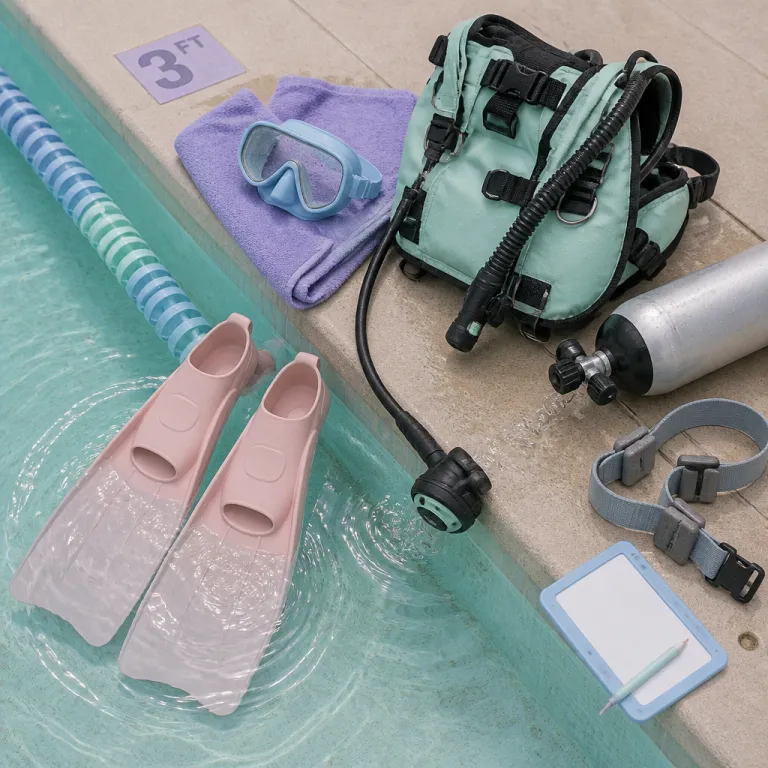
Before your first lesson in a scuba swimming pool, you will be introduced to the core pieces of scuba equipment. This usually includes a mask, fins, exposure suit, buoyancy control device, regulator set, and a tank, all adjusted carefully by the instructor. Learning how each part of the equipment works on land makes the first underwater session far smoother.
Once in the pool, training focuses on a small set of fundamental skills that every diver must master, such as clearing a flooded mask, recovering a lost regulator, and maintaining neutral buoyancy. Instructors often break these skills into simple steps, letting you repeat them in shallow water until they feel natural, then gradually moving to slightly deeper pool sections. Because the pool environment is calm, you can concentrate on breathing slowly, staying relaxed, and understanding how tiny movements affect your position underwater.
Over several sessions, these pool dives build a strong foundation for later open water dives, where currents, waves, and marine life add complexity. Good diving courses also include briefings on how to care for diving equipment, how to plan a safe scuba dive, and how to communicate clearly with a buddy. By the time you leave the swimming pool phase, you will have the skills and confidence to enjoy your first real ocean dives rather than simply coping with them.
Planning your first scuba swimming pool course and travel adventure
Choosing where to learn is as important as choosing where to travel for your first marine holiday. Many urban centres now host dedicated scuba swimming pool facilities or deep training tanks, while coastal resorts often combine pool sessions with sheltered bay dives. When you research options, look for schools that emphasise safety, small class sizes, and modern training methods rather than only promoting fast certification.
Facilities such as Deep Dive Dubai and other purpose built indoor dive centres illustrate different but effective approaches, one using extreme depth and others focusing on versatile training pools. Both rely on controlled environment training and simulated underwater scenarios to enhance diver skills and ensure safety, which is the core objective of any serious programme. When you book, check facility requirements, confirm the language of instruction, and ask how many pool dives and water dives are included in the course price.
Once you feel comfortable in the pool, you can start planning trips that match your new certification level, using curated resources from reputable dive travel specialists and training agencies. Align your travel dates with your training schedule so that there is minimal gap between your final pool session and your first open water dives. This continuity keeps your skills sharp and turns your initial scuba diving qualification into a memorable, confidence filled journey.
Digital preparation, safety mindset, and sharing your diving experience
Modern dive centres increasingly use online tools to streamline the path from curiosity to confident scuba diver. Many schools invite you to register an account on their website, where you can complete theory modules, manage an account purchase for your chosen course, and review medical forms before arriving at the pool. This digital preparation leaves more time in the water for practical training and reduces stress on the first day.
Some platforms offer an option to register for updates about new diving courses, pool sessions, or travel opportunities, which helps you plan future training. Once you complete your intro scuba or full open water diver course, you can often log your pool dives and water dives digitally, building a clear record of your progress. Sharing your diving experience responsibly on social media, perhaps using a share on Facebook feature from the dive centre, can inspire friends while also reminding you of key safety lessons.
Throughout this journey, remember that a scuba swimming pool is not only a convenient venue but a cornerstone of safe, enjoyable scuba diving. By respecting depth limits, listening closely to your instructor, and practising core skills until they feel effortless, you create habits that will protect you in every future dive. As one common training question puts it plainly, “What is the deepest diving pool?” and the factual answer “Deep Dive Dubai at 60.02 meters,” confirmed by Guinness World Records, underlines how far controlled environments can go in preparing divers for the wider underwater world.
Key figures about scuba swimming pools and diver training
- Deep Dive Dubai reaches a depth of 60.02 metres, making it the deepest swimming pool for diving and allowing staged training from beginner levels to advanced technical practice in a single facility, according to Guinness World Records.
- Y 40 Deep Joy in Montegrotto Terme, Italy, has a depth of 42 metres, which still exceeds the maximum depth of a standard recreational open water diver certification and offers ample room for deep training simulations, as reported by Scuba Diving Magazine.
- Specialised scuba swimming pool facilities operate year round, which means divers can maintain skills and complete courses even when local seas are too cold or rough for safe beginner training.
- The rise of indoor diving facilities with artificial underwater environments has expanded access to safe training, particularly for travellers living far from the coast who still want high quality scuba diving instruction before a marine holiday.
FAQ: scuba swimming pools and beginner diving
Are scuba swimming pools suitable for complete beginners ?
Yes, a scuba swimming pool is specifically designed to give beginners a safe, controlled environment with clear water, stable temperatures, and close supervision from instructors. This setting removes variables such as waves and currents, allowing new divers to focus on breathing, buoyancy, and basic safety skills.
What is the deepest diving pool currently in operation ?
The deepest swimming pool built for diving is Deep Dive Dubai, which reaches 60.02 metres and includes platforms, simulated environments, and extensive safety systems. This depth allows both shallow training for beginners and advanced practice for experienced divers in the same facility.
Where is Y 40 Deep Joy located and who uses it ?
Y 40 Deep Joy is located in Montegrotto Terme, Italy, and it serves recreational divers, freedivers, and professional teams who want deep water training in a controlled setting. Its 42 metre depth and warm, clear water make it ideal for practising descent techniques and emergency drills before open water trips.
Why should I start with pool dives before open water dives ?
Starting with pool dives lets you learn core skills such as mask clearing, regulator recovery, and buoyancy control without environmental stress, which builds confidence quickly. When you later move to open water dives, you can focus on enjoying the marine environment rather than struggling with basic techniques.
How do I choose a good scuba swimming pool facility for training ?
Look for centres that use recognised training agencies, employ experienced instructors, maintain modern diving equipment, and offer multiple confined water sessions rather than rushing certification. Checking independent reviews and asking how many students share each instructor will help you select a facility that prioritises safety and quality.