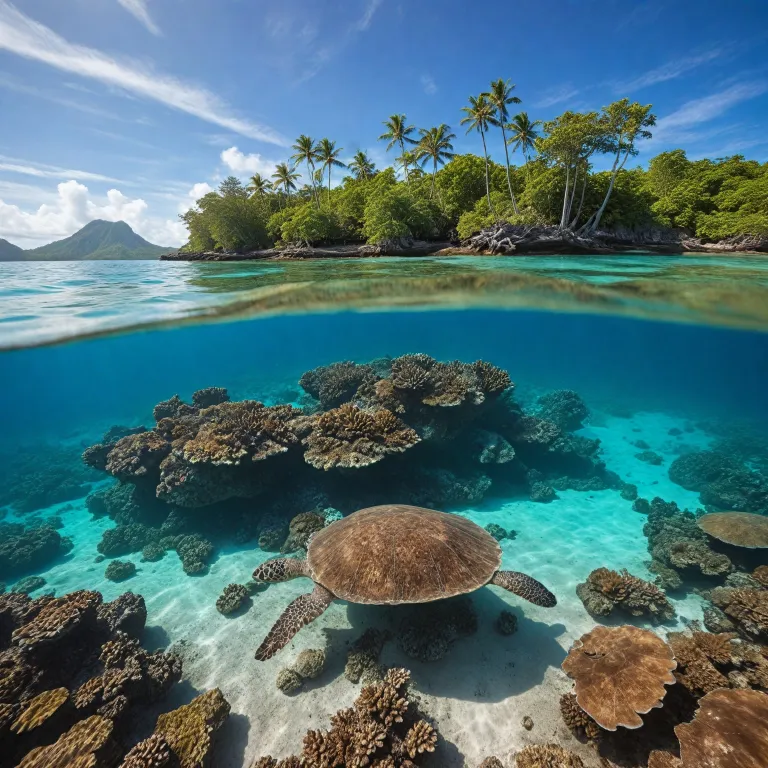
Two interesting facts about Solomon Islands every diver should know
For many divers, the phrase two interesting facts about Solomon Islands barely hints at the depth of this remote destination. The first of these facts about the country is that the islands form a vast, scattered islands archipelago stretching across the south Pacific, with more than 900 individual islands and islets. This geography creates an extraordinary range of island environments, from the high volcanic mass of Guadalcanal to the far flung Santa Cruz Islands and the rugged Ulufa Alu in the western province.
The second of the two interesting facts about Solomon Islands is that its modern identity is inseparable from the sea, both above and below the surface. The islands government, shaped by a parliamentary system inherited from the former British administration, still relies heavily on maritime links between each island and the capital Honiara on Guadalcanal. For divers, this means that many of the most pristine islands Solomon sites are reached by small boats, often guided by experienced Solomon Islanders who know every reef, channel, and lagoon.
These two interesting facts about Solomon Islands immediately frame the destination as both politically distinct and geographically complex. The country’s parliament, led by a prime minister and overseen by a governor general representing the united constitutional monarchy, must govern an area scattered over a huge swathe of the Pacific Ocean. For marine travelers, that same area translates into long coral walls, current swept passes, and sheltered bays that host manta cleaning stations, macro rich muck sites, and historic wrecks from the battles once fought around Guadalcanal.
From Guadalcanal to Santa Cruz Islands : a living maritime crossroads
When divers talk about two interesting facts about Solomon Islands, they often start with Guadalcanal and the Santa Cruz group. Guadalcanal is not only the political heart of the country but also a focal island for maritime history, where the united forces of the United States and allied navies once clashed with imperial fleets. Today, the same area holds some of the world’s most accessible wreck dives, where coral encrusted hulls rest within recreational depths and attract both pelagic species and curious reef fish.
Farther east, the Santa Cruz Islands and the smaller Cruz Islands feel like a different world, yet they remain firmly part of the solomons story. Here, the islands facts that matter to divers include strong tidal exchanges, nutrient rich upwellings, and remote atolls where very few liveaboards operate. These conditions create exceptional visibility in some seasons and dramatic schooling behavior, making the region a natural extension of any serious travel guide focused on the south Pacific.
For travelers comparing island chains, it is useful to read an elegant guide to the best tropical places to travel for divers and ocean lovers, then place the solomon islands within that wider Pacific context. Unlike many islands in the united tourist circuits of the Pacific, this country still feels raw and lightly trafficked, with small communities of Solomon Islanders maintaining traditional ties to the sea. The islands government encourages tourism that respects local customs, marine ecosystems, and human rights, which helps ensure that the reefs around each island remain vibrant for future generations.
Solomon Islands National Stadium and the changing face of Honiara
Among the less expected elements in any list of two interesting facts about Solomon Islands is the presence of a modern national stadium in Honiara. Built on Guadalcanal with funding from the People’s Republic of China, the facility seats around 10 000 people and has become a symbol of the country’s evolving relationship with the wider Pacific and Asia. For divers passing through the capital, this stadium is more than a curiosity ; it signals that the islands government is investing in infrastructure that can support larger events and, indirectly, more reliable transport links.
The Solomon Islands Government oversees this project as owner, while Chinese partners provided design and construction expertise. This collaboration reflects a broader diplomatic shift that places the solomons within a network of united interests stretching from Australia and Papua Guinea to major Asian capitals. For marine travelers, improved air connections and better port facilities in the area around Honiara can mean smoother transfers to remote island groups and liveaboard departures.
“The construction was funded by the People's Republic of China as a gift to the Solomon Islands.” For a country whose parliament and prime minister must balance traditional alliances with new partnerships, such projects carry both opportunity and responsibility. The islands facts here intersect with questions about governance, transparency, and human rights, as the governor general and cabinet weigh long term benefits against potential dependencies. Yet for divers, the practical outcome is often positive ; more flights, more reliable schedules, and a growing range of accommodations that make it easier to stage expeditions to places like the western province or the distant Santa Cruz Islands.
War wrecks, coral gardens, and the deep history of the Pacific Ocean
Any serious travel guide that highlights two interesting facts about Solomon Islands for divers must address the extraordinary concentration of war wrecks. Around Guadalcanal and neighboring islands, the seabed holds aircraft, transports, and warships from the campaigns that drew in the United States, Australia, and other allied forces. These wrecks now form artificial reefs, where soft corals, gorgonians, and schooling fish transform relics of conflict into thriving habitats that attract underwater photographers from united regions of the world.
Beyond the wrecks, the islands archipelago offers classic south Pacific reef systems that rival more famous destinations. In the western province, walls drop into the deep blue of the Pacific Ocean, while sheltered lagoons host seagrass meadows and mangroves that support juvenile fish and invertebrates. Divers can plan multi day itineraries that combine wreck dives, reef drifts, and macro focused night dives, often guided by Solomon Islanders whose local knowledge surpasses any printed travel guide.
For those comparing different island chains, resources such as a refined guide for divers and sailors in the Spanish Virgin Islands provide useful benchmarks for visibility, currents, and logistics. Yet the solomon islands remain distinct because the country’s islands government has not allowed mass tourism to dominate coastal development. Police and maritime agencies, often supported by partners from Australia and Papua Guinea, work to monitor illegal fishing and protect sensitive areas. These efforts, combined with community based stewardship, help ensure that the islands facts about biodiversity and reef health remain encouraging for visiting divers.
Culture, governance, and the role of Solomon Islanders in marine travel
Understanding two interesting facts about Solomon Islands also means looking beyond reefs to the people who call each island home. Solomon Islanders maintain strong clan and village structures, and customary marine tenure still shapes who can fish, anchor, or build in particular bays. When divers respect these traditions and engage local guides, they gain access to sites that rarely appear in commercial islands facts lists yet offer exceptional experiences.
The political framework of the country combines a Westminster style parliament with a ceremonial governor general and an executive prime minister. This structure, inherited from the former British administration, must function across a fragmented area where many islands lack formal infrastructure and rely on small boats for contact with Honiara. The islands government therefore depends heavily on local leaders, church networks, and community organizations to implement policies related to marine conservation, safety, and human rights.
For visiting divers, this governance model has practical implications that go far beyond abstract facts about constitutional law. Police units and provincial authorities in regions like the western province coordinate with village elders to manage issues ranging from anchor damage on coral to the behavior of visiting liveaboards. International partners, including Australia, the United States, and Papua Guinea, support training and capacity building that strengthen maritime safety. When travelers recognize these layers of responsibility, they can align their own practices with local expectations and contribute positively to the long term health of the solomons marine environment.
Practical guidance for planning a dive focused journey in Solomon Islands
When applying two interesting facts about Solomon Islands to trip planning, divers should first consider the sheer spread of the islands archipelago. Distances between island groups such as Guadalcanal, the western province, and the Santa Cruz Islands can be significant, and weather in the south Pacific can change quickly. A well structured travel guide will therefore emphasize flexible itineraries, buffer days in Honiara, and careful coordination with domestic airlines or liveaboard operators.
Second, divers should pay attention to the evolving infrastructure that supports marine travel across the country. The new national stadium in Honiara, for example, signals that the islands government is preparing to host larger regional events, which can affect flight availability and accommodation in the area. During major gatherings, police and local authorities may prioritize security and traffic management near the stadium, so planning ahead becomes essential for smooth transfers between the capital and outlying islands.
Finally, responsible travel in the solomon islands means engaging thoughtfully with both people and ecosystems. Respect for human rights, local customs, and village protocols should guide behavior on every island, from Ulufa Alu to the Cruz Islands and beyond. Divers can draw inspiration from sustainable coastal communities in other regions, such as carefully managed Costa Rica beach towns for divers and ocean lovers, then adapt those lessons to the specific context of about Solomon. By aligning personal choices with the expectations of Solomon Islanders, the governor, the prime minister, and the wider islands government, visitors help ensure that the most important facts about this remarkable archipelago remain positive for generations.
Key statistics related to Solomon Islands marine travel
- Solomon Islands National Stadium capacity : approximately 10 000 seats, supporting larger regional events that can influence travel flows for divers.
- Estimated construction cost of the national stadium : around 71 million USD, reflecting significant external investment in national infrastructure.
- Number of major island groups within the Solomon Islands archipelago : more than 6, including Guadalcanal, western province, and Santa Cruz Islands.
Essential questions about Solomon Islands for divers and marine travelers
What is the seating capacity of the Solomon Islands National Stadium ?
The stadium in Honiara offers around 10 000 seats, which allows the country to host regional sporting events and cultural gatherings that can increase visitor numbers. For divers, this capacity matters because major events may affect flight schedules, accommodation availability, and local transport in the capital area. Planning around these peak periods helps ensure smoother connections to remote island dive regions.
Who funded the construction of the Solomon Islands National Stadium ?
The facility was financed by the People’s Republic of China as a diplomatic gift to the Solomon Islands, with Chinese firms providing design and construction services. This partnership illustrates how the islands government engages with external donors to upgrade national infrastructure that indirectly benefits tourism and marine travel. Divers transiting through Honiara can see the stadium as a visible sign of the country’s growing regional profile in the south Pacific.
When was the Solomon Islands National Stadium officially opened ?
The stadium was inaugurated shortly before it hosted a major regional multi sport event, marking a milestone in the country’s modern development. Its opening signaled that the solomons were ready to welcome larger numbers of athletes, officials, and visitors from across the Pacific Ocean. For marine travelers, this development underscores the importance of monitoring event calendars when planning dive expeditions among the islands.