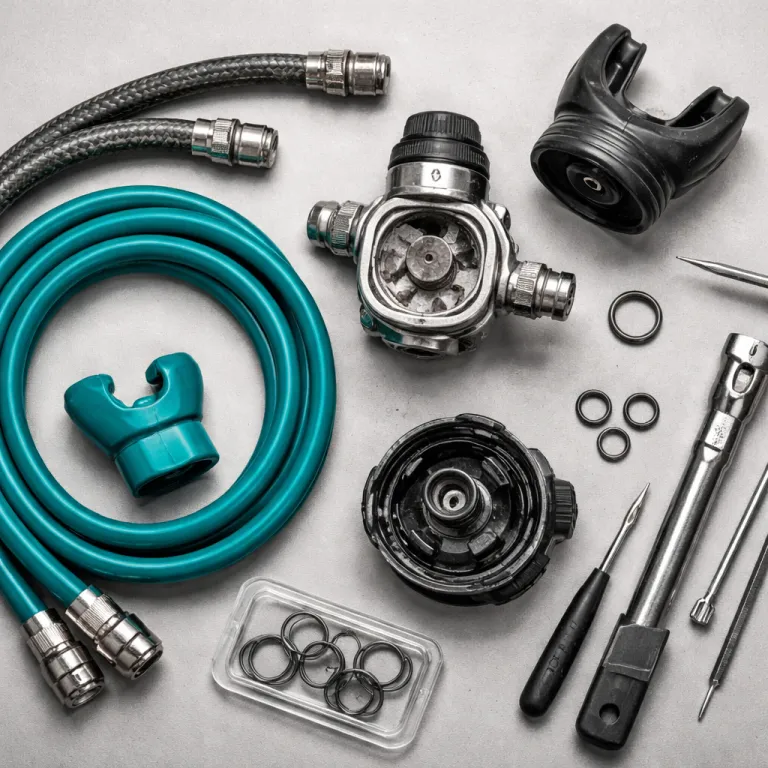
Right-to-repair meets life support: why your scuba gear must be serviceable
On a deep reef wall, your kit is not lifestyle equipment, it is life support. When we talk about scuba gear repair and maintenance, we are really talking about whether your regulator, BCD and scuba cylinder can be trusted when the current picks up and the divemaster signals you to hold still. The right-to-repair movement in diving reframes every piece of scuba equipment as something that must be opened, checked, and restored rather than quietly discarded when a proprietary part fails.
Right-to-repair in diving means three concrete things; open access to parts, independent service options, and transparent design that allows certified technicians to perform a full gear service without begging a single manufacturer for permission. It is the difference between a regulator that any qualified dive shop can strip, clean, and rebuild, and a sealed unit that must be shipped back to one factory whenever a low pressure hose o-ring weeps. For business travellers stretching a work trip into a Red Sea long weekend, that distinction decides whether your gear service schedule is predictable or whether a minor fault cancels the only dive day you had.
Industry guidance is already clear on the cadence; “Annually or every 100 dives, whichever comes first” is the recommended service interval for most scuba gear, a guideline echoed in many regulator manuals from brands such as Scubapro and Aqualung and in training materials from agencies like PADI and SSI. That annual service rhythm underpins safe equipment upkeep, because it forces a complete visual inspection of every critical component, from the second stage housing to the pressure inflator elbow on your BCD. When you treat your dive gear as a system that must be inspected, tested, and documented each serviced year, you extend life, reduce failure risk, and turn right-to-repair from a slogan into a safety protocol.
Look closely at your own equipment list and you will see where repairability either supports or undermines that protocol. A regulator with a published service manual, widely available parts kits, and clear torque specs invites proper regulator servicing by any authorised centre. A computer with a user replaceable battery and standard USB-C charging is aligned with the same philosophy, while a sealed unit that must be replaced when the battery fades quietly pushes you back into the replace-and-discard cycle.
Manufacturers argue that locking down parts protects quality control and limits liability, and there is some truth there. Life support equipment is not a bicycle; a badly serviced regulator or low quality o-ring in a scuba cylinder valve can be catastrophic at depth. As one senior technician at a large coastal service centre puts it, “We are happy to follow any brand’s procedures, but we need access to parts and manuals to keep divers safe.” The answer is not to block independent repair service, but to insist on certified technicians, proper training, and clear documentation so that every piece of scuba gear can be both serviceable and safe.
The safety case for repairable tanks, regulators and gauges
Safety in diving is often framed as training and judgment, but the quiet backbone is disciplined scuba equipment servicing. A well maintained regulator, cylinder, and gauge console gives you a generous safety margin when visibility drops or a current turns a relaxed dive into a swim. When those same items are treated as sealed consumer gadgets, you lose the ability to check, test, and intervene before something fails underwater.
Start with the scuba cylinder, because it literally holds your breathing gas under high pressure. A proper visual inspection of each cylinder interior and exterior, combined with periodic hydrostatic test cycles, is non negotiable if you want to extend life safely beyond the first few serviced year stamps. In many countries, hydrostatic testing is required every five years, with annual visual inspections recommended by training agencies and gas suppliers; for example, the Compressed Gas Association and many European standards bodies specify five-year hydro intervals for typical steel and aluminium scuba cylinders. When you buy or rent, ask the dive shop to show the inspection list, confirm the last test date, and explain their repair service process for valves, burst discs, and low pressure ports.
Regulators deserve the same scrutiny, because they are the most complex support equipment in your kit. A transparent regulator service regime includes full disassembly, ultrasonic cleaning of internal parts, replacement of all wear components, and precise tuning of both first and second stage to manufacturer specifications. Divers Alert Network (DAN) and major agencies such as PADI consistently highlight regular regulator servicing as a key control measure in equipment-related incident prevention, with DAN’s annual diving reports noting that poorly maintained gear is a recurring factor in a subset of reported accidents. When a brand refuses to sell parts kits outside its own centres, it effectively blocks independent gear service and makes it harder for travelling divers to get their life support inspected on schedule.
Right-to-repair advocates are not asking to cut corners; they are asking for the tools to maintain life support properly. Standardised low pressure hose fittings, accessible pressure inflator spares for BCD units, and open service documentation all make it easier for certified technicians to perform safe scuba gear repair and maintenance. Industry service protocols used by professional workshops are clear about the basics; a standard scuba gear service includes inspection, cleaning, parts replacement, and functional testing, supported by tools such as ultrasonic cleaners and calibrated pressure gauges, and it should be logged so that you know exactly which year each component was last overhauled.
For frequent travellers, the practical question is how to choose scuba gear that supports this approach. Look for regulators and gauges whose manufacturer publishes service intervals, sells parts to authorised independent centres, and honours warranty coverage when annual service is done by any certified technician. When you are planning complex itineraries that include remote walls or shark dives such as those described in our guide to how long your scuba tank will last underwater, that transparency around servicing is as important as any advertised performance spec.
There is also a cultural shift underway in how divers talk about maintenance. Experienced guides now ask guests when their dive gear was last serviced, not just how many dives they have logged, because they know that a neglected regulator or corroded cylinder valve can turn a routine dive into an avoidable incident. As a travelling executive with limited time windows, you cannot afford that kind of preventable disruption, so you build safety into your equipment choices long before boarding the plane.
Environmental and economic stakes: extending the life of your dive equipment
Every time a sealed regulator or non serviceable BCD is discarded, it becomes part of a growing pile of marine sports waste. The environmental argument for scuba gear repair and maintenance is simple; extending the life of each piece of equipment reduces both manufacturing impact and landfill volume. A 2021 report from the European Environmental Bureau on consumer electronics estimated that extending product lifetimes by just one year across the EU could cut associated emissions by around 4 million tonnes of CO₂ annually, and the same logic applies to dive gear made from metals, plastics, and composites. When you choose scuba gear designed for repeated servicing instead of rapid replacement, you align your diving with the same sustainability standards you expect from your hotels and airlines.
Modern materials make this easier, not harder, despite what some marketing suggests. Durable technopolymer housings, corrosion resistant alloys, and eco friendly wetsuit materials such as Yulex or limestone based alternatives to neoprene all support long service intervals when paired with proper inspection and cleaning. The shift toward USB-C charging for torches and user replaceable dive computer batteries also reduces the need to send entire units away, which in turn lowers the carbon footprint of your scuba equipment lifecycle.
From a financial perspective, the numbers are equally persuasive for frequent travellers. A typical annual service for a regulator and BCD, including parts and labour, often costs less than a single day of high end diving in destinations like Raja Ampat or the outer Great Barrier Reef. Many authorised centres quote starting prices around 50–80 USD per major item for standard overhauls, depending on brand and local labour rates, a range reflected in price lists published by large retail chains and independent service workshops in North America and Europe. When you amortise that annual service over a regulator expected to last two decades with regular maintenance, the cost per dive becomes negligible compared with flights, liveaboard cabins, or premium guiding.
Right-to-repair also protects the value of your gear as an asset. A well documented service history, with each serviced year logged by an authorised dive shop, makes it easier to resell or trade in regulators, cylinders, and computers when you eventually upgrade. Buyers will pay more for scuba gear that comes with a clear list of inspections, tests, and repair service receipts, because they can see that the life support chain has been respected.
Manufacturers sometimes counter that sealed units reduce user error, but that argument ignores the role of certified technicians and authorised centres. Guidance from DAN, PADI, SSI and other training agencies consistently emphasises that regular servicing of scuba equipment aims to prevent equipment failure, extend gear lifespan, and ensure diver safety, and those goals are best met when trained people can access the parts they need. When you choose brands that lean into this model, you support an ecosystem where gear serviced properly stays in circulation longer and fewer cylinders, regulators, and BCD shells end up scrapped prematurely.
There is also a subtle benefit for your own situational awareness underwater. Divers who engage with their gear maintenance, who understand what a proper visual inspection looks like or how a low pressure hose should seat in a first stage, tend to notice small issues earlier. That awareness pairs naturally with the personalised safety features in modern computers, as explored in our analysis of how new dive computers personalise safety, creating a feedback loop where both hardware and diver behaviour are tuned for longevity.
How to choose repairable scuba gear that travels well
For the business leisure diver, the real test of scuba gear repair and maintenance is how it performs across continents and tight schedules. You need equipment that can be serviced in Singapore on a layover, checked in Cape Town before a weekend trip, and tuned again at a Caribbean dive shop without voiding any warranty. That means prioritising brands and models whose manufacturer supports a global network of certified technicians and authorised parts distribution.
Start with a structured checklist when evaluating new purchases, rather than being seduced by marketing gloss. Ask whether the regulator has an open service programme, whether parts kits are available to independent centres, and whether the second stage can be tuned without proprietary software. Confirm that the BCD uses standard low pressure inflator fittings, that its pressure inflator assembly can be disassembled for cleaning, and that replacement parts are listed clearly in the service documentation.
Apply the same discipline to accessories and support equipment, because small failures can still ruin a trip. Choose gauges with replaceable spools and hoses, not sealed units that must be discarded when a single o-ring fails, and favour computers with user replaceable battery designs that use standard cells. When you assemble your travel gear list, add a note of the last serviced year for each major item so that you can schedule annual service before long haul itineraries rather than gambling on a distant repair service.
Local expertise remains central, even in a right-to-repair world. Certified technicians at reputable dive shops use ultrasonic cleaners, calibrated pressure gauges, and specialised tools to perform the kind of detailed inspection and functional test that most travelling divers cannot replicate in a hotel room. As one common industry answer puts it without ambiguity; “Can I service my scuba gear myself? It's recommended to use certified technicians to maintain warranty and safety standards,” a position echoed in many manufacturer service policies.
When you arrive at a new destination, treat the first visit to the dive shop as a safety briefing, not a retail errand. Ask how they log gear service records, whether they follow manufacturer guidelines for annual service, and how they handle scuba cylinder visual inspection and hydrostatic test scheduling. In remote regions where supply chains are thin, the operators who can show you a disciplined maintenance culture are often the same ones who know the outer reefs and shark channels best, as we highlight in our report on swimming with Great Barrier Reef sharks in the outer reef wilderness.
Ultimately, choosing repairable scuba gear is an assertion of control over your own safety and schedule. You are not at the mercy of a single manufacturer or distant service centre when a low pressure hose seeps or a second stage free flows on the morning of a key dive. You are working with a global network of qualified professionals, supported by transparent design and accessible parts, to keep your life support equipment ready whenever your calendar finally opens for that next blue water window.
Key figures on scuba gear servicing and reliability
- Most manufacturers recommend that core scuba gear be serviced every 1 year or every 100 dives, whichever comes first, which aligns annual service intervals with typical travel patterns for frequent divers (manufacturer guidelines and training agency manuals).
- Average regulator and BCD servicing at authorised centres often starts around 50 USD per item, a cost that is modest compared with premium day boat rates in leading dive destinations (average service centre pricing published by major retailers).
- Standard professional servicing workflows include visual inspections, functional testing, component cleaning, and parts replacement, supported by tools such as ultrasonic cleaners and calibrated pressure gauges, which together significantly reduce the risk of in water failures (industry service protocols and technician training syllabi).
- Regularly maintained scuba equipment improves both reliability and performance, with industry bodies such as DAN and major training agencies emphasising that disciplined servicing directly supports accident prevention and compliance with international safety standards (training agency guidance and DAN annual diving reports).
- Digital diagnostic tools are increasingly used in authorised service centres, allowing technicians to identify subtle performance issues in regulators and computers before they become noticeable to divers, which further extends the usable life of high end gear (service technology adoption reports from equipment manufacturers).
Downloadable pre-trip maintenance checklist (copy or print for your logbook):
– Confirm last full service date for regulator, BCD, and gauges (aim for within 12 months or 100 dives).
– Check cylinder visual inspection and hydrostatic test dates against local regulations.
– Inspect hoses, mouthpieces, inflators, and o-rings for cracks, corrosion, or leaks.
– Verify dive computer battery level and, if user replaceable, carry a spare cell.
– Pack service records or digital copies in case a technician needs history on arrival.