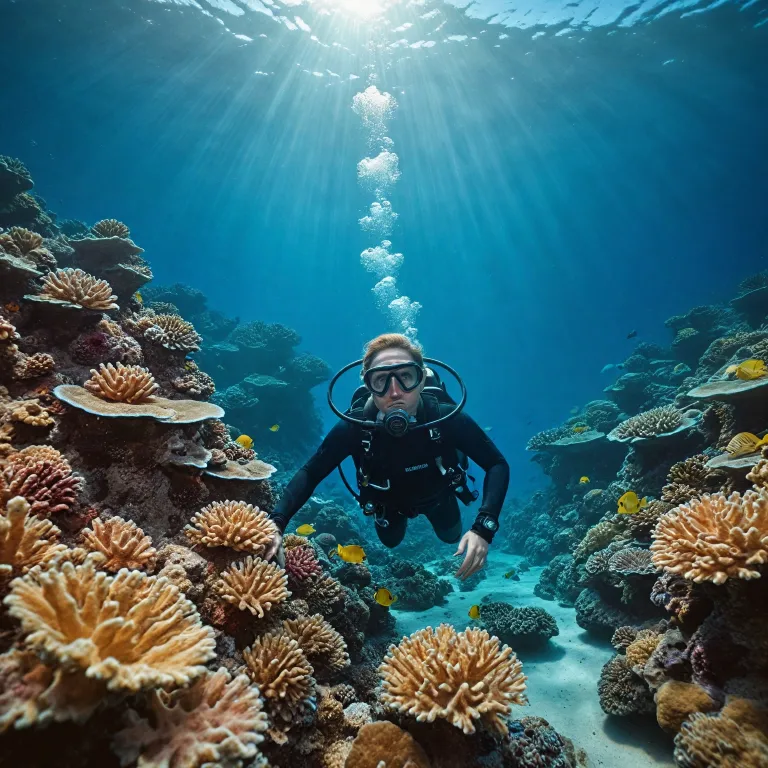
Understanding the fundamentals of underwater navigation
Underwater navigation is a critical skill for divers, marine biologists, and anyone involved in marine travel. The absence of GPS signals, limited visibility, and dynamic underwater environments make navigation both challenging and essential. Divers must rely on a combination of navigation techniques, including compass navigation, natural navigation, and dead reckoning, to maintain their position and direction beneath the surface. Mastery of these navigation techniques will help ensure safety, accuracy, and efficiency during each dive.
Navigation systems underwater differ significantly from those used on land. Human divers, as well as autonomous underwater vehicles (AUVs), must estimate position using reference points, compass heading, and distance traveled. The process often starts at a defined starting point, with divers using kick cycles to measure distance and reference points to verify their position. The accuracy of underwater navigation is vital, especially when exploring complex dive sites or conducting drift diving where the current can alter the intended direction and position.
Advanced navigation systems, such as inertial navigation and acoustic positioning, have revolutionized underwater exploration. These systems allow for precise position surface estimation and improved accuracy in challenging conditions. The integration of biomimetic sensors and machine learning has further enhanced navigation techniques, providing divers and researchers with reliable tools to navigate even at great depth. Understanding these fundamentals is the first step toward mastering underwater navigation techniques for both recreational and professional diving.
Traditional and modern navigation techniques for divers
Traditional underwater navigation relies heavily on compasses, natural cues, and dead reckoning. Compass navigation is the backbone of many diving navigation systems, enabling divers to maintain a steady heading and return to their starting point. By monitoring compass heading and counting kick cycles, divers can estimate distance traveled and maintain awareness of their position relative to the surface and reference points. Natural navigation, on the other hand, uses visual cues such as rock formations, sand ripples, and light patterns to guide divers through underwater environments.
Modern navigation techniques incorporate advanced tools like sonar devices, acoustic transponders, and inertial measurement units. These technologies provide real-time feedback on position, direction, and depth, greatly increasing the accuracy of underwater navigation. For example, acoustic positioning systems can achieve an accuracy of 0.01 meters, making them invaluable for scientific research and complex dive sites. The integration of artificial lateral line sensors, inspired by marine animals, has further improved the ability to navigate in low-visibility conditions.
For those interested in learning more about the latest advancements in underwater navigation, resources such as advanced navigation systems for divers offer in-depth information. Whether using traditional or modern methods, divers must always consider air consumption, depth, and time to ensure a safe return to the surface. The combination of these navigation techniques will help divers navigate confidently and efficiently in any underwater environment.
Key principles of compass navigation and dead reckoning
Compass navigation is a foundational skill for divers, providing a reliable method to maintain direction and orientation underwater. By setting a compass heading at the starting point, divers can follow a predetermined route, using kick cycles to measure distance traveled. Regularly checking the compass and adjusting for drift ensures that divers remain on course, even when visibility is limited or currents are strong. Compass navigation is especially useful for returning to a reference point or surface position after exploring a dive site.
Dead reckoning is another essential navigation technique, allowing divers to estimate position based on time, speed, and direction. This method requires careful tracking of heading, distance, and elapsed time, as well as frequent reference to known points along the route. While dead reckoning can be affected by environmental factors such as current and visibility, it remains a valuable tool for divers navigating unfamiliar or complex underwater terrain.
Combining compass navigation with dead reckoning increases the accuracy and reliability of underwater navigation. Divers can use both techniques to cross-check their position, adjust for drift, and ensure a safe return to the surface. For more detailed guidance on compass navigation and dead reckoning, visit essential navigation skills for divers. Mastery of these principles will help divers confidently explore new dive sites and navigate challenging underwater environments.
Natural navigation cues and reference points in marine environments
Natural navigation is an invaluable technique for divers, relying on environmental cues to maintain orientation and direction underwater. Features such as rock formations, coral structures, and sand ripples serve as reference points, helping divers estimate position and distance traveled. Light patterns, water movement, and the presence of marine life can also provide important information about direction and depth. Using these natural cues, divers can navigate complex dive sites without relying solely on instruments.
Reference points are essential for maintaining accuracy during a dive. By identifying and memorizing key features at the starting point, divers can create a mental map of the underwater environment. This map will help guide them back to the surface position or to specific locations within the dive site. Natural navigation techniques are particularly useful in drift diving, where currents can quickly alter a diver’s position and heading.
Combining natural navigation with compass and dead reckoning techniques enhances overall navigation accuracy. Divers should practice identifying and using reference points on every dive, gradually building their confidence and skill in navigating underwater. Mastery of natural navigation will help divers explore marine environments safely and efficiently.
Technological advancements in underwater navigation systems
Recent years have seen significant advancements in underwater navigation systems, driven by research and development in marine technology. Autonomous underwater vehicles (AUVs) and human divers now benefit from innovations such as sonar-based systems, acoustic positioning, and artificial lateral line sensors. These technologies provide precise data on position, direction, and depth, greatly improving the accuracy and reliability of underwater navigation. The development of battery-free underwater GPS systems has further expanded the possibilities for marine exploration.
One of the most notable innovations is the integration of biomimetic sensors and machine learning algorithms. These systems mimic the natural navigation abilities of marine animals, such as the lateral line system in fish, to detect movement, vibration, and pressure gradients. This approach enhances the ability of navigation systems to operate in low-visibility or dynamic environments, where traditional methods may be less effective. The expected impact of these advancements is a revolution in marine exploration, defense operations, and underwater research.
As navigation systems continue to evolve, divers and researchers can expect even greater accuracy, efficiency, and safety in their underwater missions. The combination of traditional techniques and cutting-edge technology will help ensure that underwater navigation remains a vital skill for all who venture beneath the surface.
Practical tips for improving accuracy and safety in diving navigation
Improving accuracy in underwater navigation requires a combination of preparation, practice, and the right tools. Divers should always plan their route in advance, identifying key reference points and setting compass headings before entering the water. Regularly checking position, direction, and depth throughout the dive will help maintain accuracy and prevent disorientation. Using a combination of navigation techniques, such as compass navigation, dead reckoning, and natural navigation, increases the likelihood of a successful and safe dive.
Air consumption and time management are critical factors in diving navigation. Divers must monitor their air supply and elapsed time to ensure they can return to the surface safely. Practicing kick cycles and distance estimation on every dive will help improve accuracy in measuring distance traveled. In drift diving, it is especially important to account for current and adjust navigation techniques accordingly. "The primary challenges include the absence of GPS signals, limited visibility, dynamic environmental conditions, and the need for precise localization without surface references."
Regular training and the use of advanced navigation systems will help divers build confidence and competence in underwater navigation. By staying informed about the latest technological advancements and best practices, divers can enhance their safety and enjoyment of marine travel. Remember, accurate navigation is the key to exploring new dive sites and returning safely to the surface position.
Quantitative insights and frequently asked questions about underwater navigation
Key quantitative statistics
- Accuracy of long baseline acoustic positioning systems: 0.01 meters
- Operational depth of sonar systems: 6000 meters
Frequently asked questions
What are the primary challenges in underwater navigation?
The primary challenges include the absence of GPS signals, limited visibility, dynamic environmental conditions, and the need for precise localization without surface references.
How do marine animals navigate underwater?
Marine animals, such as fish, use lateral line systems to detect movement, vibration, and pressure gradients in the water, aiding in navigation and obstacle avoidance.
What is the role of sonar in underwater navigation?
Sonar systems emit sound waves and analyze the returning echoes to detect objects, measure distances, and assist in navigation by mapping the underwater environment.
For further reading, consult reputable sources such as the Divers Alert Network, the Professional Association of Diving Instructors, and the National Oceanic and Atmospheric Administration.