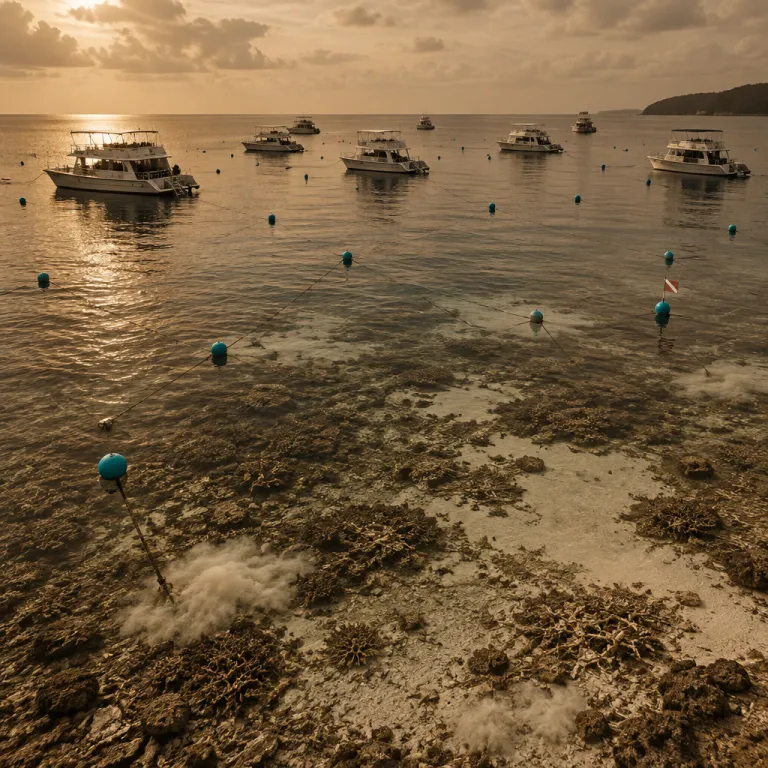
The reef pays for the queue: why popularity becomes a threat
Dive tourism has a paradox at its heart, and it sits right on the reef crest. As soon as a marine site becomes famous in global tourism literature, the line of boats lengthens, the moorings groan, and the coral quietly absorbs the cost of our enthusiasm. The phrase dive site carrying capacity overtourism sounds academic, yet it describes the very real moment when a crowded site turns from dream to damage.
In places like komodo, Ras Mohammed, and Cozumel national park, the problem is not that tourists arrive, but that they arrive faster than management systems can adapt. Every visitor adds a little more fin wash, a little more sediment, a little more sunscreen to a marine environment that evolved for clarity, not constant disturbance. When tourism development races ahead of carrying capacity measurement, the reef becomes the subsidy that keeps the tourism industry profitable.
Carrying capacity in a marine protected area is the maximum number of divers and snorkellers a reef can host without long term degradation. Managers talk about ecological carrying capacity, but social carrying capacity matters just as much, because a poor visitor experience often signals that the ecosystem is already under stress. When overtourism issues appear on the surface — queues at ladders, stressed guides, impatient tourist behaviour — they are usually late indicators of deeper ecological strain.
Komodo National Park is a textbook case of tourism carrying pressures colliding with fragile marine life. Liveaboards and day boats from labuan bajo have multiplied, and each operator wants access to the same handful of iconic sites. Without strict tourism management, the park risks becoming a descriptive example in every future journal of sustainable tourism, cited as a place where development goals were pursued while assessing carrying limits far too late.
For solo divers and digital nomads planning extended travel, the temptation is to chase every famous wall and seamount. Yet responsible travel now means asking hard questions about tourism management and local communities before you book that next komodo itinerary. The carrying capacity debate is no longer an abstract topic for a journal sustainable development article ; it is the lens through which serious divers should evaluate every national park and marine reserve on their wish list.
How thousands of good dives add up to a damaged reef
Reefs rarely fail from one catastrophic impact ; they erode under the weight of many small, repeated ones. Fin kicks that brush branching coral, careless contact with gorgonians, and poorly controlled buoyancy all chip away at the living structure that makes a site worth visiting. Dive site carrying capacity overtourism is the cumulative result of thousands of well meaning tourists, not a handful of reckless ones.
At a crowded site in komodo or the Red Sea, watch the descent line during peak season and you will see the problem in real time. A constant stream of visitor bubbles and fins funnels down the same corridor, scouring the same bommies and sponges, while guides struggle to maintain both safety and a high quality visitor experience. When tourism carrying thresholds are exceeded, even the best trained équipe of divemasters cannot fully protect the reef from physical abrasion.
Anchoring and mooring systems are another quiet driver of overtourism issues in marine protected areas. Where national park authorities have not invested in robust mooring buoys and clear management rules, skippers still drop anchors on sand that drags into coral, or crowd too many boats onto a single mooring. Over time, the capacity of the substrate to recover is exceeded, and the damage becomes a permanent feature of the site rather than a temporary scar.
Chemical and sediment impacts scale with tourism development as well. High concentrations of certain sunscreen ingredients, combined with constant fin driven sediment plumes, can stress coral polyps and reduce recruitment on already pressured reefs. These are subtle indicators that rarely appear in glossy tourism literature, yet they are central to any serious assessing carrying study in a journal sustainable marine management context.
There is also a social carrying dimension that divers feel long before they see broken coral. When a national park site becomes so busy that tourists queue on the surface, collide on safety stops, and rush through briefings, the visitor experience degrades even if the reef still looks colourful. For solo travellers, including those following guides for independent divers such as destinations where single supplement policies work in your favour, this crowding can turn a long planned trip into a frustrating exercise in underwater traffic management.
Digital nomads who base themselves for months in hubs like labuan bajo or Dahab see the long arc of tourism development more clearly than most short stay tourists. They watch as a once quiet marine site shifts from a handful of boats to a flotilla, and as local communities pivot their entire economy toward tourism without always securing strong protected areas governance. Their lived experience is a descriptive dataset that rarely makes it into formal carrying capacity measurement, yet it should inform how we think about sustainable tourism and development goals in every emerging dive destination.
What actually works: caps, permits, closures and the price of access
Managing dive site carrying capacity overtourism is not guesswork ; it is applied science and hard politics. The most effective tools are blunt but proven — daily diver caps, permit systems, rotating site closures, and mandatory mooring buoys. Each one reshapes the visitor experience and the economics of tourism management in ways divers need to understand before they judge the price tag.
Daily caps on the number of divers at a marine site are the clearest expression of ecological carrying capacity. In komodo national park, proposals to limit boats at sites like Batu Bolong and Castle Rock aim to keep both tourists and coral safe from the chaos of uncontrolled access. For operators, these caps force a shift from volume based tourism industry models toward higher value, lower impact sustainable tourism that aligns more closely with long term development goals.
Permit systems add another layer of control, especially in heavily marketed protected areas. By requiring every tourist and visitor group to secure a limited number of permits per day, park authorities can track tourism carrying levels and adjust them as new ecological indicators emerge. The trade off is obvious ; access becomes more exclusive, prices rise, and local communities worry about being priced out of their own national park waters.
Rotating site closures are less popular with tourists but powerful from a management perspective. Closing a crowded site for a defined period allows coral and fish communities to recover, while shifting visitor pressure to alternative locations that have spare capacity. When combined with strong monitoring and descriptive reporting in journal sustainable development publications, these closures become a living laboratory for assessing carrying thresholds in real time.
Mooring buoys may seem mundane, yet they are one of the most cost effective tourism management investments a park can make. Properly installed systems prevent anchor damage, spread boats across a wider area, and give skippers clear indicators of where they can safely tie in without harming marine life. For divers, the presence of well maintained moorings is often a quiet sign that a destination takes sustainable development and tourism carrying seriously, much like the careful zoning described in long form features on Arabian Sea diving off the package tourism radar.
The uncomfortable truth is that dive tourism revenue funds much of the protection in many national parks and other protected areas. The answer is rarely fewer divers overall, but better managed ones who accept that sustainable tourism sometimes means higher fees, stricter rules, and the occasional closed site. When you pay a premium for a well regulated komodo itinerary or a tightly controlled Galápagos cruise, you are not just buying a better visitor experience ; you are underwriting the carrying capacity science that keeps those reefs alive.
How to book like a reef ally, not a reef burden
Responsible divers do not need more guilt ; they need a clear playbook. The dive site carrying capacity overtourism debate only becomes meaningful when it shapes how you choose operators, seasons, and even specific sites. Think of every booking as a small vote in favour of either short term tourism development or long term sustainable development.
Start with the operator, because tourism management lives or dies in the briefing room and on the deck. Ask explicit questions about how many tourists they take to each marine site per day, whether they respect any national park caps, and how they spread visitor groups across different reefs to avoid a single crowded site. If the answers are vague or purely descriptive marketing, treat that as an indicator that carrying capacity and social carrying concerns are not yet embedded in their culture.
Timing matters almost as much as operator choice, especially in hotspots like komodo and labuan bajo. Shoulder season travel can dramatically reduce your personal contribution to overtourism issues, while often improving your visitor experience with quieter boats and more attentive guides. For digital nomads with flexible schedules, aligning trips with lower capacity periods is one of the most powerful forms of low effort sustainable tourism available.
Resist the checklist mentality that concentrates every tourist on the same three named sites in a national park. A good guide will know alternative reefs with similar marine life but far less pressure, and choosing those options helps distribute tourism carrying loads more evenly across the ecosystem. This is the same mindset that makes off radar wreck itineraries, such as the Charleston scuba wreck adventures from historic harbors to offshore graveyards, such a compelling model for divers seeking depth without adding to a crowded site problem.
Finally, pay attention to how destinations talk about assessing carrying limits and development goals in their public communication. When a komodo national park briefing mentions tourism carrying thresholds, journal sustainable research partnerships, and concrete measurement indicators, you are hearing the language of a tourism industry that is trying to align with genuine sustainable development. As a visitor, your role is to reward that effort with your business, your patience when a site is closed, and your willingness to accept that the best dive trips are measured not just in encounters, but in the health of the reef you leave behind.
Key figures on carrying capacity and overtourism in marine parks
- In many heavily dived marine protected areas, studies have suggested that limiting use to roughly 4 000 to 6 000 dives per site per year can help maintain coral cover, compared with sites receiving more than 10 000 dives annually where breakage rates and algal overgrowth are significantly higher (various marine park monitoring reports).
- Komodo National Park has seen visitor numbers grow from tens of thousands of tourists per year to well over one hundred thousand, concentrating pressure on a small cluster of high profile sites and prompting Indonesian authorities to explore stricter permit systems and higher conservation fees to manage tourism carrying levels.
- Global tourism to coastal and marine destinations accounts for an estimated 40 % of all international travel, which means that even small improvements in tourism management and carrying capacity assessment can have outsized benefits for coral reef conservation worldwide (data from the United Nations World Tourism Organization).
- Research in several national parks with coral reefs has shown that installing mooring buoys can reduce anchor related coral damage by more than 80 %, underlining why relatively low cost infrastructure is a cornerstone of sustainable tourism and effective visitor management.
- Visitor surveys in popular reef destinations consistently report that perceived crowding begins to negatively affect the visitor experience when more than 20 to 30 divers are present on a single site at the same time, highlighting the importance of social carrying thresholds alongside purely ecological indicators.