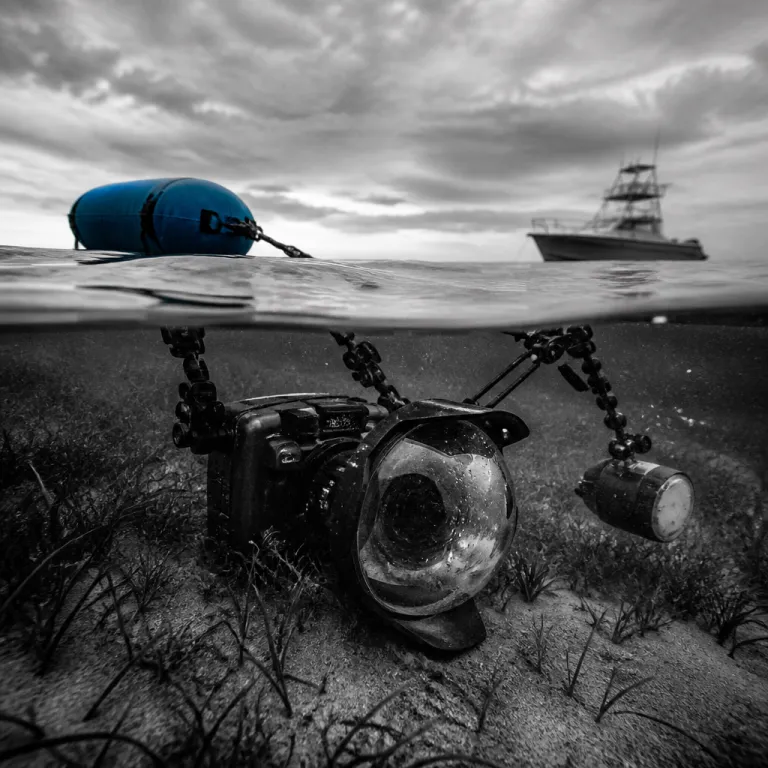
Why the split shot seduces every underwater photographer
A well executed split shot feels like a portal between worlds. The frame holds water and sky, reef and shoreline, a single image that lets the viewer breathe air while peering into underwater silence. For couples who travel to dive, this style of underwater photography turns a routine swim into a shared memory that will live far beyond the trip.
Technically, a split shot is a photograph where the camera records both the underwater scene and the surface environment in one exposure. This split level perspective gives instant context that a pure underwater image often lacks, because the subject sits in relation to the island, the boat or the limestone cliffs above. When you line up half water and half sky cleanly, the shot feels composed rather than accidental, and the eye moves naturally between both halves.
Underwater photography pioneers such as David Doubilet, Franco Banfi and Cristian Dimitrius turned these split shots into a signature language. Their work shows how a wide angle lens, a large dome and careful focus can capture marine life and human presence in the same frame without chaos. As they proved on reefs from the Caribbean to the Coral Triangle, the best split shot is not about equipment alone ; it is about timing, water going gently past the dome and a subject that tells a story above and below.
The dome port equation and choosing the right camera housing
The first rule of reliable split shots is simple ; the larger the dome port, the easier your life. An 8 inch dome gives the water line more room to curve gently, so the surface transition looks clean and the underwater half stays sharp from foreground to background. Smaller domes can still capture a compelling split shot, but they demand more precise focus and tighter control of aperture settings to maintain depth field across both halves.
Your underwater housing must be treated as life support for the camera, because housing water leaks will end a trip faster than any missed shot. Look for an underwater housing with a proven record for sealing around a dome port, and test it in shallow water before going offshore. When you plan to shoot split shots regularly, choose a system that accepts both wide angle lenses and fisheye options, since focal length flexibility lets you adapt to tight lagoons, open reef walls and close subjects near the surface.
For couples investing in their first serious underwater photography rig, it is worth reading a detailed guide to selecting the best underwater cameras for diving and marine travel. A camera with strong dynamic range will handle the bright sky and darker underwater exposure in a single image more gracefully. Whether you shoot with a compact or a mirrorless body, prioritise intuitive exposure settings, reliable shutter speeds and ergonomics that let you adjust aperture priority or manual modes while treading half water at the surface.
Core split shot underwater photography tips for sharp, balanced images
Successful split shots start with the right settings before you even enter the water. Use aperture priority or full manual mode, then stop down to around f/8–f/16 so the depth field stretches from the nearest coral head to the clouds. Pair that with a fast shutter speed, usually 1/250 second or higher, because surface chop and your own movement will blur the image if shutter speeds are too slow.
Meter for the sky first, then lift the underwater exposure with strobes or by slightly raising ISO, so the subject below the surface does not sink into shadow. This approach protects the highlights and preserves dynamic range, which is critical when half the frame is bright air and the other half is filtered water. When you shoot multiple shots in quick succession, you will notice how small changes in angle, focus point and dome position at the surface transform a flat frame into a balanced split shot.
Keep the dome port exactly at the water line, with half water covering the glass, and tilt the camera minutely until the surface cuts the frame where you want it. Before going for your hero shot, fire several test shots to check for water droplets on the upper half of the dome, since even tiny beads can ruin an otherwise perfect image. A soft cloth, a quick dip and lick technique or a hydrophobic solution can help the water will sheet cleanly off the glass, giving you a crisp surface boundary that feels intentional rather than messy.
For couples who like to log every dive and every photograph, an elegant travel journal for ocean bound adventures becomes a quiet tool for improving your underwater photography. Note which aperture settings worked best in each lagoon, which focal length framed both palm trees and reef, and how different shutter speeds handled wave action. Over several trips, these written observations will guide you toward the best personal split shot underwater photography tips for your style, rather than generic advice.
Reading water, light and location for refined split level compositions
Location choice matters as much as any camera specification when you plan a day of split shots. Aim for clear, shallow water where the subject sits no deeper than 1–2 metres, because more depth forces you to compromise focus or exposure between the halves. Protected bays, mangrove shallows and leeward reef flats usually offer calmer surface conditions, so the water going across your dome stays predictable instead of chaotic.
Light is your second ally ; early morning or late afternoon gives softer exposure and more forgiving dynamic range between sky and underwater. Midday sun can still work for underwater photography, but you will need to watch for harsh reflections on the surface and adjust settings to avoid blown highlights. When clouds move across the sun, pause your shoot rather than chasing inconsistent light, because a stable exposure lets you refine composition, subject placement and focus without constant recalibration.
Think like a travel editor when you frame each shot, asking what story the image will tell about this place. A split level composition that shows a snorkeller gliding above a coral garden, with a low island and moored panga on the surface, says more about your trip than a generic reef close up. Move slowly, keep the underwater subject near the foreground and use a wide angle focal length so both the couple and the reef feel intimate yet expansive within the same frame.
Handling waves, droplets and advanced control for confident couples
Even with perfect gear, the ocean still negotiates every split shot you attempt. Small wind waves push the dome up and down, shifting the water line and forcing you to react with micro adjustments in wrist angle and body position. Calm mornings in lagoons or cenotes are usually the best windows, because the surface behaves like glass and the camera responds predictably to your movements.
Water droplets are the quiet enemy of half water compositions, especially when you shoot toward the sun. Before each sequence, dip the dome fully, then bring it up slowly so a thin film of water will cover the glass instead of breaking into beads. Check the LCD after a few shots ; if droplets appear on the upper half of the image, clean the dome and reset before going back to your subject.
As you refine your technique, start experimenting with different shutter speeds and aperture settings to control mood. A faster shutter speed freezes splashes around a surfacing turtle, while a slightly slower one lets the surface blur just enough to suggest motion without losing focus on the main subject. When you begin integrating strobes or continuous lights, angle them downward so they illuminate only the underwater portion, avoiding harsh reflections on the surface and keeping the split shot natural rather than over lit.
For divers interested in how technology shapes their time in the water, it is worth reading about AI driven dive computers and data privacy. The same critical mindset applies to underwater photography gear ; understand what your camera and housing record, how they behave in housing water, and which automated exposure modes you prefer to override. Control, in the end, is what lets you move from lucky split shots to deliberate, repeatable results.
Learning from masters and building a couple friendly workflow
There is a reason names like David Doubilet, Franco Banfi and Cristian Dimitrius recur whenever underwater photographers talk about split shots. They treated the technique not as a gimmick, but as a disciplined way to bridge human and marine worlds in a single frame. Their portfolios show how a carefully chosen subject, from a crocodile in a mangrove channel to a snorkeller above a seagrass meadow, can anchor both halves of the image with equal strength.
Workshops and guided trips that focus on underwater photography often dedicate full sessions to split level work. Instructors will repeat the same fundamentals ; "What is split-level photography?" "Photography capturing both above and below water in one image." "What equipment is needed for split shots?" "Wide-angle lens, large dome port, underwater housing." "How to achieve sharp focus in split shots?" "Use small apertures and large dome ports." "What are ideal conditions for split shots?" "Calm, shallow waters with clear visibility." "Who pioneered split-level photography?" "David Doubilet is a notable pioneer." Hearing these principles in the water, with your hands on the housing, accelerates learning far more than reading alone.
For travelling couples, the most efficient workflow is often a shared one, where one partner handles the camera and the other manages logistics, watches conditions and sometimes becomes the subject. Agree on a simple shot list before entering the water, including two or three must have split shots at each site, so you do not waste the best light debating ideas at the surface. Back on shore, review images together, noting which exposure settings, focal length choices and compositions worked, then refine your split shot underwater photography tips as a team for the next destination.
FAQ
What equipment do I need for reliable split shots while travelling
You need a camera with good dynamic range, a compatible underwater housing, and a dome port of at least 8 inches for easier half water framing. A wide angle or fisheye lens helps you include both the underwater subject and the surface scenery in one image. Add a pair of strobes if you want more control over underwater exposure in bright tropical light.
How can I keep both the underwater and topside halves in focus
Use a small aperture, typically between f/8 and f/16, to increase depth field across the frame. Pre focus slightly into the water, around one third of the distance to your main subject, then avoid refocusing between shots. A larger dome port also helps maintain sharpness from foreground to background in split level compositions.
Which locations are best for practising half and half underwater photography
Look for calm, shallow water such as sheltered bays, lagoons, cenotes or leeward reef flats with interesting scenery above the surface. Clear visibility makes it easier to compose around a strong underwater subject like coral heads, seagrass or rock formations. Gentle conditions let you concentrate on exposure settings, focus and composition instead of fighting waves.
How do I avoid water droplets ruining the top half of the image
Before shooting, fully submerge the dome, then lift it slowly so a continuous film of water covers the glass instead of forming beads. Check the LCD after a few frames and clean the dome whenever you see droplets on the sky portion of the shot. Some photographers also use hydrophobic treatments or a quick lick technique to help the water will sheet off more evenly.
Should I use manual mode or aperture priority for split shots
Both approaches work, but many underwater photographers prefer aperture priority when light changes quickly near the surface. Set a small aperture for depth field, choose a minimum shutter speed to freeze motion, and let the camera adjust ISO or shutter speed within that range. In stable light, manual control of exposure gives you the most consistent results across a series of split shots.