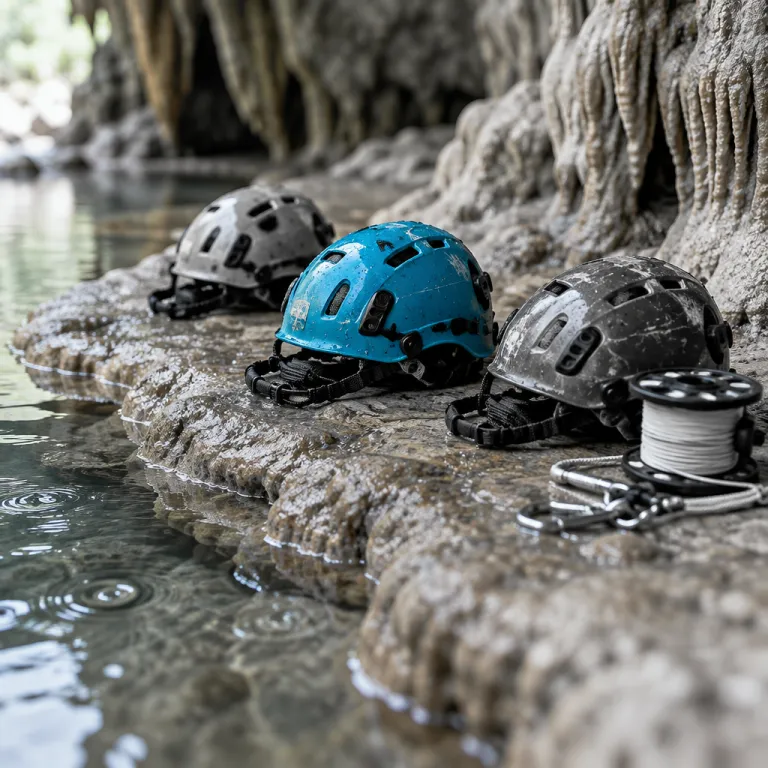
Why the best helmet for cave diving matters more than you think
Cave diving compresses risk into a narrow, unforgiving space. A helmet that feels merely acceptable on an open water dive becomes critical when your head is centimeters from hard limestone, steel, or fragile formations. The best helmet for cave diving turns your head into a protected command center, integrating lights, communications, and safety systems without compromising comfort, trim, or situational awareness.
Every diver who enters an overhead cave environment exposes the skull to repeated impact risks from ceilings, restrictions, and unexpected surges. In these conditions, a helmet designed specifically for underwater exploration must combine a rigid outer shell with energy absorbing foam to manage both glancing blows and direct hits. Cave divers who treat their helmets as primary life support equipment, not accessories, tend to make more conservative decisions, maintain better awareness during long dives, and avoid unnecessary contact with the environment.
Within the global diving community, experienced explorers agree that a helmet good enough for whitewater or climbing is rarely ideal underwater. The best helmets for cave diving balance near-neutral buoyancy, streamlined profiles, and reliable mounts for primary and backup lights. When you plan dives in complex cave systems, your helmet becomes the platform that keeps your light, your head, and your route all aligned, especially during zero-visibility exits, gas-sharing drills, or lost-line simulations.
Core safety features: shell, foam, and impact management underwater
Start your evaluation with the outer shell, because this is your first line of protection. A hard shell built from ABS, polycarbonate, or composite materials spreads the force of an impact across a wider area of the helmet, reducing the chance of localized fractures or sharp edges. In underwater cave passages where ceilings can pinch down suddenly, that hard shell often takes dozens of small hits during a single dive, similar in energy to the drop tests used in industrial and climbing standards such as EN 397 and EN 12492, which specify vertical impacts onto steel anvils.
Inside the helmet, the foam liner does the quiet, essential work of absorbing energy. A well engineered foam helmet uses multi density layers to slow the head gradually during a collision, instead of allowing a sudden stop that can cause concussions. Many helmets adapted for overhead use reference impact criteria similar to EN 12492 or EN 397, which typically involve drop heights around 1–2 m and peak acceleration limits near roughly 200–250 g. When you compare helmets for cave diving, remove the padding and inspect how the foam connects to the shell and to the suspension system, because gaps, crushed zones, or loose bonding can compromise impact performance.
For divers planning cavern tours with children or newer cave divers, such as those exploring cenotes with guided cavern dives, robust impact protection becomes even more important. Before booking any family oriented cavern experience, review how operators describe their helmet protection standards on their cavern and cenote information pages, then match your personal gear to or above that level. A helmet designed for repeated underwater impacts will keep both new and experienced divers safer as they build confidence in overhead environments, especially when contact with the ceiling is more frequent during early skill development.
Fit, comfort, and head size: getting the system right for long dives
No matter how advanced the shell or foam, a helmet that does not fit your head size correctly will fail when you need it most. The best helmet for cave diving should feel snug without pressure points, staying stable when you rotate or tilt your head rapidly. During long dives, a poorly fitted helmet can cause neck fatigue, headaches, and subtle distraction that erodes decision making and awareness of gas, time, and navigation.
Look for a suspension system that allows micro adjustments both before and during the dive, because neoprene hoods, temperature changes, and exertion can all alter how the helmet sits. Many cave divers prefer dial based systems that can be tightened with gloved hands, keeping the helmet secure even when currents or line entanglements tug at mounted lights. When you test helmets, simulate real cave diving movements by turning, backing up, and rolling your head as if negotiating a restriction, then perform a shallow-water check: flood the suit, hover neutrally, and shake your head firmly to confirm the helmet does not shift or rotate.
Training centers that specialize in overhead environments, such as programs that shape confident cave divers for global adventures, often insist on helmets that remain stable during valve drills and zero visibility exits. Ask instructors to evaluate how your helmet behaves when you practice emergency procedures, because they see patterns across many divers and many helmets. A helmet good for cave diving will stay aligned with your hood and your primary light beam, even after repeated donning and doffing between dives, and will not ride up when you look down to manage reels, stage bottles, or scooters.
Lighting integration: building a reliable underwater light system on your head
In a cave, light is not a convenience; it is your only visual connection to the route home. The best helmet for cave diving therefore functions as a stable platform for a complete light system, not just a place to strap a single torch. Most experienced cave divers run at least one primary light and two backups, with at least one light mounted directly to the helmet to maintain illumination if a hand-held unit is lost, occupied, or fails.
When you assess helmets, examine how easily you can mount lights without compromising balance or snag resistance. Some models include molded rails or flat sections that allow you to mount a GoPro or a compact primary light while keeping the overall profile smooth. A helmet designed with integrated cable routing and attachment points reduces the risk of entanglement on guideline reels, stage bottles, or rock projections during complex dives. In shallow water, perform a step-by-step test: mount the lights, clip in all cords, rotate your head through full range of motion, then run a guideline past the helmet to identify and correct any snag points.
Brands such as Petzl, originally known for climbing and caving, offer helmets whose shells accept a wide range of light brackets and adhesive mounts. Many divers adapt these helmets for underwater use by pairing them with high performance canister lights and robust backup lights fixed to each side of the head. Whatever configuration you choose, test the full system in open water first, then in simple caverns, before trusting it on deeper or more complex cave dives, and verify that the added equipment does not make the helmet more than about 50–100 g positively or negatively buoyant in the water when fully assembled.
Materials, durability, and maintenance in harsh cave environments
Cave water can be fresh, brackish, or fully marine, and each environment stresses helmet materials differently. A hard shell that performs well in freshwater may degrade faster in saltwater if hardware and coatings are not corrosion resistant. The best helmet for cave diving uses stainless or marine grade fittings, along with adhesives and foams that tolerate repeated immersion and drying cycles, plus UV exposure during transport and surface intervals.
After every series of dives, rinse the helmet thoroughly, paying attention to the foam liner, straps, and any light mounts. Sand, silt, and fine clay can work their way between the shell and foam, gradually abrading the interface and reducing impact protection over time. Inspect the helmet secure points where the suspension system anchors to the shell, because cracks, elongation around these holes, or rust-stained hardware signal that the helmet has absorbed significant stress and may no longer meet its original impact performance.
Many divers who split their time between wrecks and caves, such as those joining offshore wreck adventures from historic harbors, use the same helmets across environments. If you do this, track the total number of dives and any recorded impacts in a simple log, then retire the helmet proactively once it shows signs of UV fading, foam compression, or hardware corrosion. A helmet good enough for overhead diving should never be kept in service past the manufacturer’s recommended lifespan—commonly 5–10 years from first use for many models—and frequent cave divers in abrasive or saltwater conditions may need to shorten that interval significantly.
Practical buying checklist: how to choose your cave diving helmet
When you stand in a dive shop or browse online, translate marketing language into concrete cave diving requirements. First, verify that the helmet offers full coverage around the temples, forehead, and back of the head, with a shell that extends low enough to protect against overhead impacts. Then check that the foam helmet liner and suspension system can be adjusted to your exact head size while still accommodating a hood, and confirm that the chin strap can be tightened so that you cannot pull the helmet off when it is buckled.
Next, evaluate how the helmet will integrate with your existing underwater equipment, especially lights and cameras. If you plan to mount a GoPro or similar action camera, confirm that the shell shape and material accept adhesive or bolt on mounts without compromising structural integrity. For serious cave divers, a helmet designed for high performance use should allow symmetrical placement of lights to avoid neck strain and maintain a balanced light beam, and should remain close to neutral in the water once all accessories are installed.
Finally, consider how the helmet will feel and function across many dives, not just during a brief fitting. Ask whether replacement foam, straps, and hardware are available, because a modular system extends the useful life of the helmet while maintaining protection standards. In the end, the best helmet for cave diving is the one that disappears on your head during the dive, quietly delivering protection, stability, and reliable light exactly when you need them most, while still meeting recognized impact and durability guidelines from the manufacturer.
Key figures on cave diving helmets and safety
- Analyses from organizations such as Divers Alert Network (DAN) indicate that overhead environment incidents represent a small fraction of total dives but a disproportionately high share of serious and fatal injuries, underscoring the need for robust head protection and disciplined procedures in caves; DAN annual reports consistently highlight that poor gas planning, guideline loss, and impact trauma are recurrent factors.
- Impact testing standards for many industrial and climbing helmets, including EN 397 and EN 12492, involve drop tests from heights around 1–2 m onto steel anvils, with peak acceleration limits typically in the 200–250 g range; these standardized impact energies provide a useful baseline when assessing helmets adapted for underwater cave use.
- Field observations from technical training agencies indicate that experienced cave divers often log hundreds of dives on a single helmet, which makes regular inspection and timely replacement essential to maintain consistent impact protection and avoid age-related material fatigue, especially in abrasive or high-flow systems.
- Manufacturers commonly recommend replacing helmets every 5–10 years depending on use, UV exposure, and contamination, but frequent cave divers in abrasive or saltwater environments may need shorter intervals due to accelerated shell wear, foam compression, and hardware corrosion; a conservative approach is to retire heavily used helmets closer to the lower end of that range.
FAQ about choosing the best helmet for cave diving
Do I really need a helmet for every cave dive ?
Yes, any overhead environment where rock or structure exists above your head warrants a helmet. Even in large, open caverns, unexpected surges, buoyancy shifts, or contact with other divers can cause head impacts. Wearing a helmet on every cave dive builds consistent habits and protects you from both major and minor collisions, while also providing a stable platform for lights and cameras.
Can I use a climbing or caving helmet underwater ?
Some climbing and caving helmets, including models from brands like Petzl, can be adapted for underwater use, but they are not all equal. You must ensure that materials, hardware, and foam tolerate repeated immersion and that the helmet integrates well with your light system. Always test the setup in controlled conditions before relying on it in complex cave dives: check buoyancy in shallow water, confirm that straps do not loosen when wet, and verify that adhesives and mounts remain secure after multiple immersions.
How should a cave diving helmet fit over a hood ?
The helmet should feel snug but not painful when worn over your hood, with no significant movement when you shake or rotate your head. You should be able to adjust the suspension system easily while wearing gloves, both at the surface and underwater. If the helmet shifts enough to move your primary light beam off target, the fit is too loose for safe cave diving; perform a simple check by looking at a fixed object, shaking your head, and confirming that the beam stays centered.
Where should I mount my primary and backup lights on the helmet ?
Most cave divers mount the primary light either on the hand or as a canister light, then place at least one backup light on each side of the helmet. This symmetrical arrangement keeps the head balanced and ensures redundancy if one light fails or is damaged. Avoid cluttering the top of the shell with too many devices, because this increases snag risk in tight cave passages; instead, mount lights low and close to the sides, then run a guideline over the helmet in shallow water to confirm that nothing catches.
When should I replace my cave diving helmet ?
Replace your helmet immediately after any significant impact that might have compromised the shell or foam, even if no cracks are visible. Beyond that, follow the manufacturer’s recommended service life—often 5–10 years from first use—shortening it if you dive frequently in abrasive caves or saltwater. Regular inspections for cracks, foam compression, UV fading, and corroded hardware will help you decide when performance has dropped below safe cave diving standards, and logging impacts or drops provides an objective trigger for early retirement.
Representative cave-capable helmet models and trade-offs
| Helmet model | Strengths for cave diving | Limitations and considerations |
|---|---|---|
| Petzl Vertex | Approximate dry weight around 490–500 g with suspension; robust shell, comfortable cradle, widely used in industrial and rope-access work; accepts multiple brackets and adhesive mounts for lights and cameras, with side slots and front plate for accessories. | Not purpose-built for immersion; typically slightly positive in freshwater once lights are added, so divers should confirm in-water buoyancy and trim; requires careful selection of corrosion-resistant hardware and thorough post-dive rinsing to manage long-term durability. |
| Petzl Panga | Dry weight commonly in the 400–450 g range depending on size; simple, durable design aimed at group and rental use; easy size adjustment and good coverage for temples and back of head; generally close to neutral in water with minimal accessories. | Fewer integrated mounting options; may need custom brackets or adhesive pads to support a full cave lighting configuration, and divers should verify that any added mounts do not significantly change buoyancy or create snag points. |
| Generic ABS work-at-height helmet | Often cost-effective, with strong shells and EN-certified impact performance; dry weights typically between 350–550 g depending on model; commonly available with side slots and front plates for accessories, allowing flexible placement of backup lights. | Quality and material resistance to immersion vary widely; divers must verify foam type, hardware corrosion resistance, and buoyancy before cave use, and should confirm that replacement parts are available so the helmet can be maintained safely over its service life. |