Why fluorescence night diving coral changes the way you see a reef
Slip into the water on a calm tropical night and the reef seems muted, a dark outline against deeper shadow. Then your guide signals, you switch on the blue light, and fluorescence night diving coral suddenly turns the entire scene into an electric painting. For couples used to classic night dives, this first fluorescence night feels like stepping backstage into a private marine performance.
Fluorescence is not bioluminescence ; it is a different marine phenomenon entirely. When a focused beam of blue light or near ultraviolet light hits certain proteins inside coral tissue, those proteins absorb the energy and re emit it as fluorescent green, orange, red, or yellow. Under proper filters, up to around 50 % of coral species can show some fluorescent response, which means a familiar dive site becomes a glowing marine labyrinth of unexpected patterns.
For divers who already love night diving, this is not just a gimmick but a new way to read the reef. Camouflaged creatures that vanish under white lights suddenly stand out in sharp fluorescent outlines, from tiny shrimp to scorpionfish resting motionless on rubble. Couples who plan their diving experience around encounters rather than depth will find that fluorescence diving rewards patience, slow fin kicks, and a willingness to hover close to the coral surface.
Fluorescence night diving coral also deepens your relationship with marine life beyond the usual fish ID slate. Hard corals that look beige by day can blaze in neon green, while some anemones pulse with fluo pink and orange as if wired to hidden lumens. Even in regions like nusa lembongan or Bonaire, where dive sites feel familiar after several trips, a single fluo night dive reframes the entire underwater map.
Operators who specialise in fluorescence diving usually limit groups to a handful of divers, which keeps the reef calm and the water column free of stray lights. You will carry at least one dedicated blue light dive torch and often a backup dive light with a narrower beam for navigation. The guide will brief you carefully on hand signals, because during a night dive under blue light, even a simple yellow mask or yellow filter can flare brightly and distract from the coral if you wave too much.
For couples planning a marine focused itinerary, it helps to think of fluorescence night diving coral as a curated gallery visit rather than an adrenaline night dive. You move slowly, you let the guide point out fluorescent details, and you keep your full wetsuit streamlined to avoid brushing fragile colonies. The reward is a quiet, almost meditative diving experience where the reef feels intimate, and every glowing marine accent hints at the complex chemistry inside the coral itself.
How fluorescence works on coral, anemones, and hidden reef creatures
Under normal daylight or standard night diving conditions, most coral colonies appear in soft pastels or earthy browns. Switch to blue light with a proper mask filter and the same coral heads ignite in saturated fluorescent tones that seem almost unreal. This is fluorescence night at work, where absorbed energy is re emitted at a longer wavelength that our eyes interpret as vivid colour.
Scientists explain it in simple terms that divers can appreciate ; “Fluorescence is when marine organisms absorb light and emit it as a different color.” That means your blue light or ultraviolet beam is only the trigger, while the real show comes from fluorescent proteins embedded in coral tissue, anemones, some sponges, and even certain fish. Because this reaction depends on the internal chemistry of each organism, two neighbouring coral colonies can respond very differently during a fluo diving session.
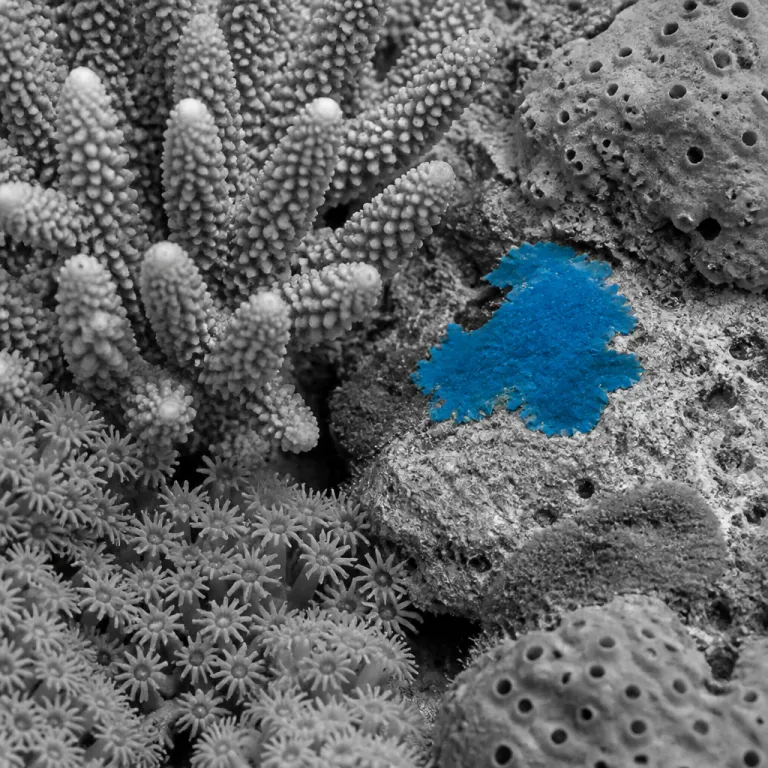
On a well planned fluorescence night diving coral tour, guides will often start by illuminating a patch of hard coral to show how structure and colour interact. Massive brain corals can glow in intricate green mazes, while branching Acropora may show only subtle fluorescent tips that reward close inspection. Soft corals sometimes remain subdued, which surprises divers who expect the most flamboyant shapes to produce the brightest fluorescent light.
Beyond corals, the real thrill for many divers is how hidden creatures suddenly betray their presence. Tiny cleaner shrimp inside anemones can shine like pinpoints of yellow or blue, and scorpionfish that vanish under white lights become outlined by faint fluorescent speckles. During a careful night dive, your guide may even use a narrow beam of blue light to scan sandy patches where flatfish and rays rest, revealing faint glowing marine contours.
This is where couples who already enjoy wildlife focused trips, such as snorkeling with whale sharks in pristine waters, recognise a familiar pattern of patient observation. A fluorescence diving session is not about covering distance but about letting the reef reveal its subtleties under controlled lights and filters. The same discipline that makes a whale shark encounter respectful and unhurried translates beautifully to a slow, attentive fluo night exploration of coral gardens.
Because not all marine life is fluorescent, the dark gaps between glowing patches are part of the aesthetic. Your eyes adjust to the rhythm of bright coral, shadowed rock, then a sudden flash of fluorescent yellow from a hidden nudibranch or crab. Over the course of several night dives, many divers report that they start to anticipate which structures will respond to blue light, building a mental map of the reef that is entirely different from their daytime diving experience.
Essential gear for a safe and spectacular fluorescence night dive
Fluorescence night diving coral demands more than a standard torch and a casual briefing. To see the reef properly, you need a dedicated blue light or ultraviolet dive light, a yellow barrier filter, and a comfortable full wetsuit that lets you hover motionless for long periods. The goal is to create a controlled underwater theatre where only the fluorescent response stands out.
Start with the primary light source, because not every dive torch is suitable for fluorescence diving. You want a blue light unit with a narrow, concentrated beam and enough lumens to excite fluorescent proteins without flooding the entire scene in scattered glow. Many operators provide rental lights, but frequent divers often invest in their own dive light so they can fine tune beam angle and brightness across different dive sites.
The second essential element is the filter system that lets your eyes interpret the fluorescent show. A yellow filter mounted on your mask, often called a mask filter, blocks most of the reflected blue light and allows only the re emitted fluorescent colours to pass through. Some divers prefer a removable yellow mask insert, while photographers may stack a yellow filter on the camera housing to balance both viewing and image capture.
Because you will be moving slowly during a night dive and spending long minutes close to the reef, thermal comfort matters more than on a brisk day dive. A full wetsuit not only keeps you warm but also protects your skin from accidental contact with coral or stinging creatures that may be harder to spot under blue light. Many experienced divers also wear thin gloves where regulations allow, though they still avoid touching any marine life.
For couples who travel with camera gear, fluorescence night diving coral opens a new technical chapter. You will likely shoot with manual white balance, a wide aperture, and slower shutter speeds, while relying on the blue light beam rather than a traditional strobe. It is worth reading up on vibrant marine life photography guides, such as those that focus on Cozumel fish and Caribbean reefs, to understand how colour rendition changes underwater.
Safety remains non negotiable, even when the focus is on aesthetics and glowing marine scenes. Most guides carry a separate white dive light for navigation and emergencies, and they will ask you to keep your blue light beam away from other divers’ eyes. Before any night dives, especially in unfamiliar regions, you should run a full equipment check, confirm that your filters are secure, and agree on clear hand signals that work even when everyone is wearing a yellow mask or mask filter.
Where to try fluorescence diving, from Bonaire to nusa lembongan
Some destinations lend themselves naturally to fluorescence night diving coral, thanks to healthy reefs, easy access, and operators who understand the nuance of this experience. Bonaire stands out in the Caribbean, with shore accessible dive sites and several centres offering structured fluorescence diving nights with rental blue lights and filters. For couples who like to plan flexible itineraries, the ability to enter the water from shore after sunset is a major advantage.
Across the Pacific, the Philippines has become a quiet favourite for fluo diving, especially around Anilao where macro life and coral diversity are exceptional. Here, guides know exactly which bommies host the most fluorescent creatures, from tiny shrimp to ornate crabs that glow under blue light like jewellery. Because many resorts sit directly on the water, a short boat ride or even a house reef entry can turn an ordinary night dive into a private fluorescence night.
The Maldives offers a different style of fluorescence night diving coral, often centred on house reef night dives at island properties. You enter from a jetty or beach, follow a shallow reef edge, and let the guide lead you through patches of fluorescent hard coral and anemones. On some atolls, manta rays may cruise the same channels by day, while at night the focus shifts from big pelagics to intimate glowing marine details.
In the Red Sea, shore accessible sites near Dahab and Sharm el Sheikh are particularly well suited to night dives under blue light. Clear water, minimal current, and abundant hard coral create ideal conditions for couples trying fluorescence diving for the first time. Many operators now offer combined packages that include both standard night diving and at least one fluo night, so you can compare how the same reef feels under different lights.
Indonesia deserves special mention, especially the islands around Bali such as nusa lembongan and neighbouring nusa penida. While these areas are famous for mola sightings and manta rays at cleaning stations, they also host sheltered bays where diving nusa by night reveals intricate fluorescent coral gardens. A single night dive in a calm cove can balance a day spent chasing currents and big marine life offshore.
Wherever you go, choose operators who treat fluorescence night diving coral as more than a novelty. Look for guides who brief you on coral species, explain how blue light interacts with fluorescent proteins, and limit group size to protect both marine life and the quality of the diving experience. For deeper context on rare species you might encounter on these trips, it is worth reading a dedicated rare fish guide for diving and marine travel, which helps you connect the glowing silhouettes you see at night with their daytime behaviour.
What you will actually see on a fluorescence night dive
The first thing most divers notice during fluorescence night diving coral is how the reef structure itself changes character. Massive coral heads that looked uniform by day now show intricate fluorescent patterns, with ridges and valleys traced in neon green or orange. Hard corals often fluoresce more intensely than soft corals, so your eye is drawn to domes, plates, and branching skeletons that seem to hum with internal light.
Anemones become natural focal points during any fluo night exploration. Their tentacles can glow in gradients of fluorescent yellow, pink, and red, while resident clownfish sometimes show faint outlines or reflective stripes under blue light. Peer closer and you may spot tiny shrimp or crabs whose bodies flare like miniature lights, turning a single anemone into a self contained underwater stage.
Camouflage breaks down under fluorescence, which is one of the quiet thrills of this style of night diving. Scorpionfish, stonefish, and flatfish that blend perfectly under white lights can reveal scattered fluorescent spots or edges that betray their outline. On sandy patches, even a subtle glowing marine highlight along a fin or spine can signal a hidden creature that would otherwise remain invisible.
Not every highlight is dramatic, and that subtlety is part of the appeal for experienced divers. Some sponges emit a soft blue or green sheen, while certain algae show faint fluo traces that frame the brighter coral colonies. Over several night dives, you start to recognise which textures tend to respond strongly to blue light, and you adjust your finning to hover over those micro habitats.
Larger marine life can also surprise you, even if they are not strongly fluorescent themselves. A passing turtle may appear as a dark silhouette against a backdrop of glowing coral, while a ray crossing the beam of your blue light can cast dramatic shadows over fluorescent patches. In regions where mola or manta rays are common by day, the contrast between those big animal encounters and the intimate focus of fluorescence diving at night makes a trip feel richly layered.
For couples who enjoy documenting their travels, the photographic potential of fluorescence night diving coral is significant. With a yellow filter on your camera housing and a well aimed blue light, you can capture close up frames that look almost abstract, all curves and colour fields. The key is to work slowly, respect the animals’ space, and remember that the most memorable images often come from a single coral head studied patiently rather than a rushed tour of the entire reef.
Photography, science, and conservation behind the neon reef
Fluorescence night diving coral sits at a rare intersection of travel experience and active research. Underwater photographers were among the first to popularise fluo diving, using blue light and yellow filters to create surreal images that felt almost studio lit. Today, many couples travel with compact cameras in housings, eager to translate their own night dives into personal neon reef portfolios.
From a technical standpoint, shooting fluorescence diving scenes demands a different mindset than daytime wide angle work. You will often work at close range with a wide aperture, slower shutter speeds, and a carefully positioned blue light that doubles as both illumination and creative tool. A yellow filter on the lens helps isolate the fluorescent response, while a mask filter on your own face ensures that what you see matches what the camera records.
Beyond aesthetics, fluorescence night diving coral has become a valuable tool for marine scientists. Researchers use blue light surveys to detect early signs of coral stress, because changes in fluorescent patterns can appear before visible bleaching. By training guides and divers to notice unusual fluorescent responses during night dives, some projects gather citizen science data that complements formal reef monitoring.
The dataset used by many educators emphasises that not all organisms participate equally in this show ; “Are all marine organisms fluorescent? No, only certain species exhibit fluorescence.” That selectivity is precisely what makes fluorescence night such a powerful diagnostic lens, because shifts in which corals glow and how intensely they respond can signal changes in water quality or temperature. For travellers who care about marine conservation, joining a guided fluo night can feel like both a privilege and a small contribution to ongoing observation.
Responsible operators weave this science into the briefing without turning the dive into a lecture. You might hear about how certain fluorescent proteins help corals manage light stress, or how repeated heatwaves alter the balance of glowing marine species on a given reef. Over time, divers who return to the same dive sites for multiple night dives can notice patterns, building a personal archive of how the reef’s fluorescent signature evolves.
For couples planning a broader marine life itinerary that includes both big animal encounters and intimate reef time, it makes sense to pair fluorescence night diving coral with classic experiences like manta ray cleaning stations or whale shark snorkelling. Each offers a different scale of connection, from the sweep of a giant fish passing overhead to the quiet pulse of fluorescent light inside a single coral polyp. Together, they create a diving experience that feels both emotionally rich and intellectually grounded, the kind of trip that lingers long after the last night dive ends.
Key figures behind fluorescence night diving coral
- Approximately 50 % of coral species are estimated to exhibit some level of fluorescence under blue light, according to National Geographic, which means even familiar reefs can look radically different during a dedicated fluorescence night dive.
- Fluorescence night diving is now offered year round in many tropical regions, with operators timing night dives to the darkest hours of the nighttime period to maximise contrast between fluorescent organisms and the surrounding water column.
- Structured fluorescence diving tours typically limit groups to small numbers of divers, often fewer than eight per guide, to reduce stray lights and minimise disturbance to sensitive marine life during night dives.
- Specialised blue light torches used for fluo diving usually deliver focused beams with several hundred to over one thousand lumens, which is sufficient to excite fluorescent proteins without overwhelming the scene with scattered light.
- Growing popularity of fluorescence night diving has encouraged more dive shops worldwide to invest in blue lights and yellow filters, expanding access to this experience beyond early hubs such as Bonaire, the Red Sea, and parts of Southeast Asia.
FAQ about fluorescence night diving coral
What is fluorescence in marine organisms?
Fluorescence in marine organisms occurs when they absorb incoming light and emit it at a different colour, usually at a longer wavelength. Underwater, this often means corals and other creatures absorb blue or ultraviolet light and re emit vivid greens, oranges, reds, or yellows. The effect becomes visible to divers when they use a blue light torch combined with a yellow filter on the mask or camera.
Is special equipment needed for fluorescence night diving?
Yes, you need more than a standard dive torch to enjoy fluorescence night diving coral properly. A dedicated blue light or ultraviolet light source is required to excite fluorescent proteins, and a yellow barrier filter on your mask or camera blocks reflected blue light so only the fluorescent colours remain. Most operators provide this equipment for guided night dives, though frequent divers often invest in their own lights and filters.
Are all marine organisms fluorescent during a fluo night dive?
No, only certain species exhibit fluorescence, which is why the reef appears as a patchwork of glowing and non glowing structures. Many hard corals, some anemones, sponges, and a few fish and crustaceans show strong fluorescent responses under blue light. Other organisms remain dark, creating the contrast that makes fluorescent patches stand out so dramatically.
Is fluorescence night diving coral safe for the reef and for divers?
When conducted with proper training and respect, fluorescence night diving coral is generally safe for both divers and marine life. Guides emphasise buoyancy control, slow movement, and avoiding contact with coral, just as on any responsible night dive. The blue light used is comparable in intensity to standard dive lights, and short exposures focused on small areas minimise potential stress to organisms.
Can beginners try fluorescence diving, or is it only for experts?
Fluorescence diving is usually recommended for divers who already feel comfortable with basic night diving skills. You should be confident with buoyancy, navigation behind a guide, and communication using hand signals in low light. Once those fundamentals are in place, a guided fluorescence night dive can be an accessible and rewarding way to deepen your understanding of the reef.